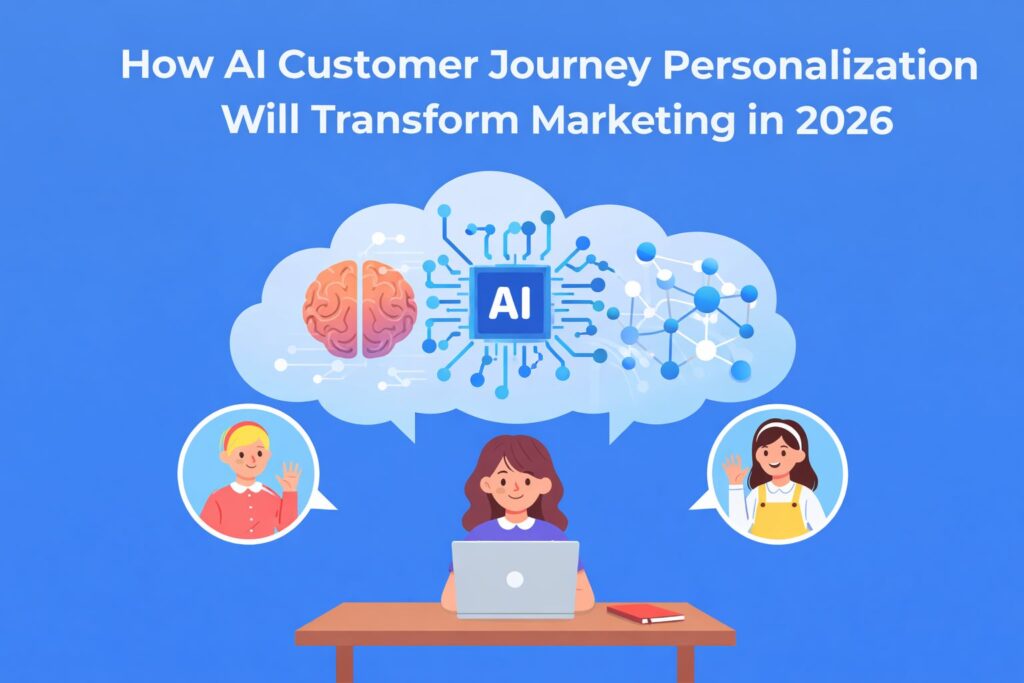
In 2026, AI customer journey personalisation will no longer be a competitive advantage — it will be the baseline expectation. According to recent industry reports, over 80% of customers are more likely to purchase from brands that offer personalised experiences, and AI adoption in marketing is projected to grow at double-digit rates annually.
As digital ecosystems expand and customer touchpoints multiply, traditional segmentation is becoming obsolete. Businesses must now anticipate needs, predict behaviours, and deliver tailored interactions in real time. This is where AI in digital marketing is reshaping how brands connect, engage, and convert.
What Is AI-Driven Customer Journey Personalisation
AI customer journey personalisation refers to the use of artificial intelligence to tailor content, messaging, offers, and experiences based on real-time customer behaviour, preferences, and predictive insights. Unlike static personalisation (e.g., adding a first name in an email), AI-driven personalization:
- Continuously learns from user interactions
- Predicts future behaviour using historical data
- Adjusts messaging dynamically across channels
- Automates decision-making at scale
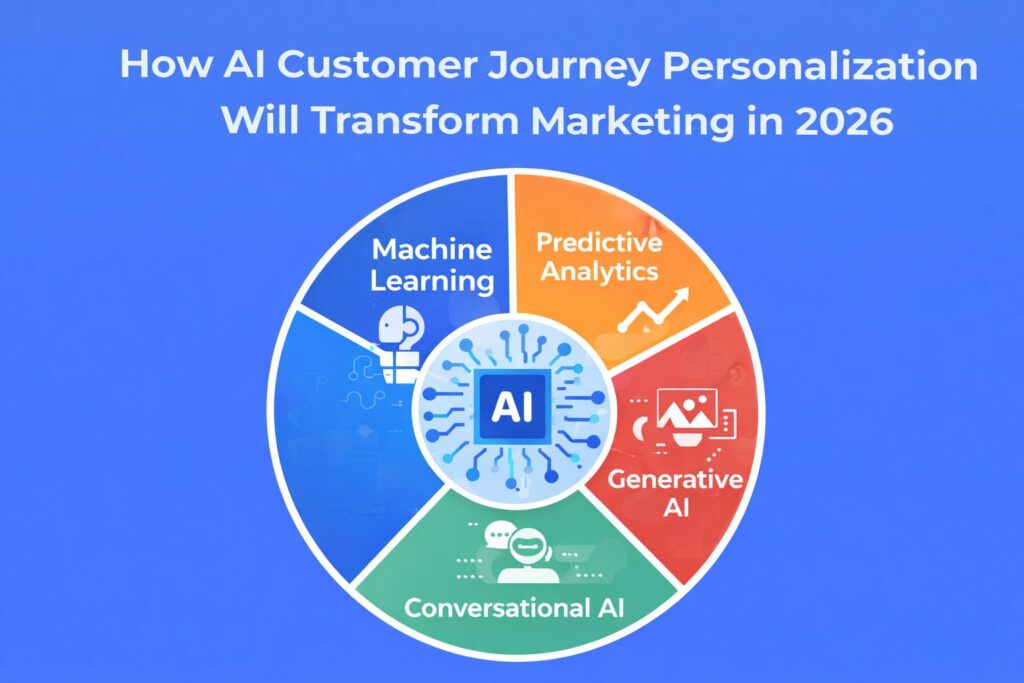
Key AI Technologies Driving AI Customer Journey Personalisation in 2026
1. Machine Learning
- Predict purchase intent
- Optimise email send times
- Recommend personalized content
- Adjust pricing dynamically
These algorithms improve continuously, making AI-powered customer experience smarter with every interaction.
2. Predictive Analytics
Predictive analytics in marketing uses historical and behavioral data to forecast future outcomes.
In 2026, predictive models will:
- Identify high-value leads
- Forecast churn risk
- Estimate customer lifetime value (CLV)
- Suggest next-best actions
This enables marketers to intervene at the right moment, improving engagement and retention.
3. Generative AI
Generative AI is transforming content personalisation at scale.
It enables:
- Dynamic email copy tailored to user segments
- Personalised ad creatives
- AI-generated product descriptions
- Customised landing page variations
Instead of creating multiple manual versions, brands can deploy personalised marketing automation powered by AI-generated assets.
4. Conversational AI
Chatbots and AI assistants are becoming more contextual and intelligent. By 2026, AI will:
.
- Understand sentiment
- Offer personalised product guidance
- Automate onboarding experiences
This shift strengthens the AI-powered customer experience across web, mobile, and messaging platforms.
5. Real-Time Data Processing
Speed is critical. Real-time data engines allow brands to
- Adjust website content instantly
- Deliver behavior-triggered push notifications
- Modify ad campaigns dynamically
Without real-time capabilities, AI customer journey personalisation loses its impact.
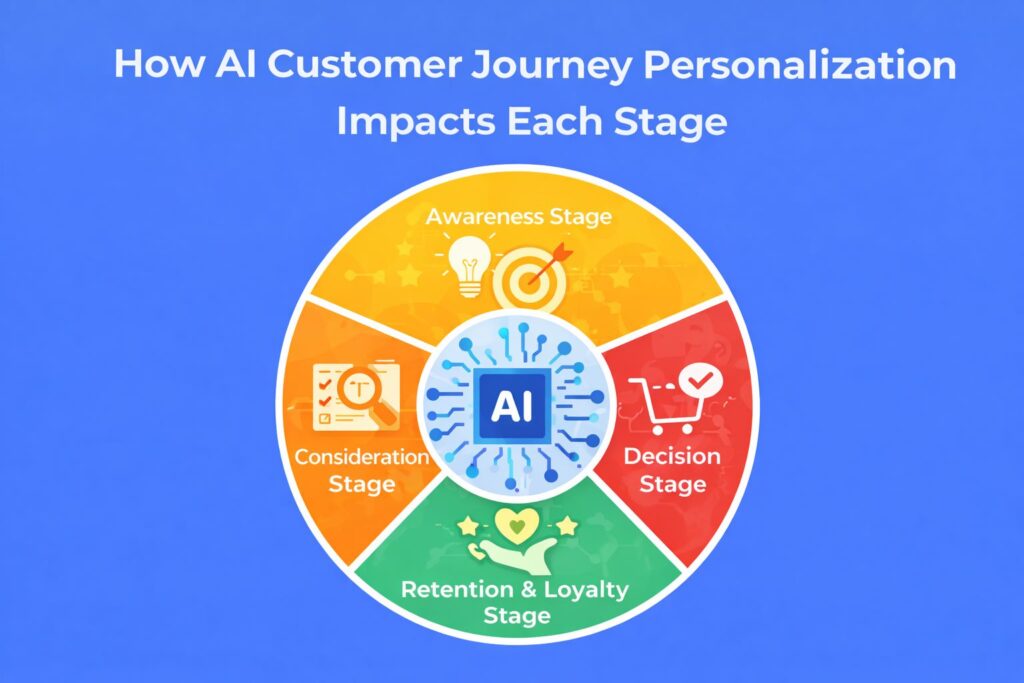
How AI Customer Journey Personalisation Will Transform Marketing in 2026
Awareness Stage
At the top of the funnel, AI analyses browsing signals, demographics, and interest patterns to:
- Deliver personalized ads
- Recommend relevant blog content
- Customise homepage messaging
- Campaigns become micro-targeted and efficient
Consideration Stage
Here, AI refines engagement by:
- Sending tailored email sequences
- Displaying product comparisons based on interest
- Offering targeted case studies
Predictive analytics in marketing ensures prospects receive information aligned with their likelihood to convert.
Decision Stage
AI supports purchase decisions through:
- Dynamic pricing offers
- Limited-time personalized discounts
- Smart checkout recommendations
This reduces friction and increases conversion probability.
Retention & Loyalty Stage
Retention is where AI customer journey personalisation delivers significant ROI.
AI helps:
- Predict churn before it happens
- Trigger loyalty rewards
- Recommend complementary products
- Send re-engagement campaigns
Studies suggest that increasing retention by just 5% can boost profits by up to 25–95%, highlighting the power of intelligent lifecycle marketing.
Business Benefits of AI Customer Journey Personalisation
Higher Conversions
- Targeted messaging improves relevance, increasing click-through and purchase rates.
Better Engagement
- Customers interact more when content aligns with their needs and timing.
Reduced Churn
- Predictive models identify disengaged users early, enabling proactive retention strategies.
Improved ROI
- Automation reduces manual effort while increasing marketing precision.
Overall, companies using advanced personalisation techniques have reported revenue increases of 10–15%, according to recent marketing research data.
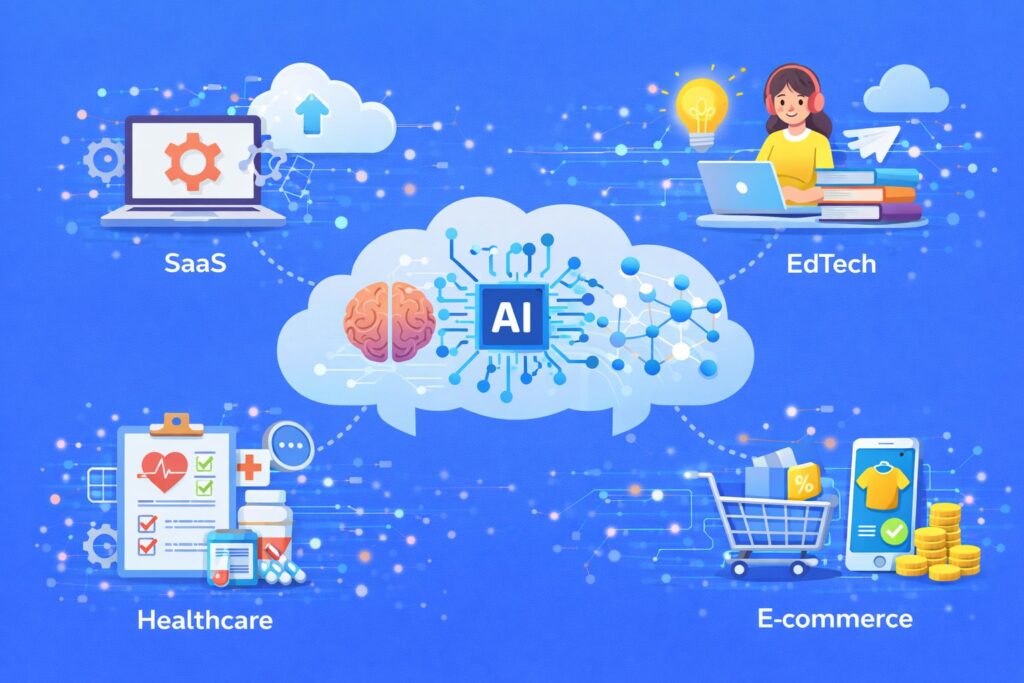
Real-World Use Cases Across Industries
E-commerce
- AI-powered product recommendations
- Smart upselling and cross-selling
- Behavior-triggered cart recovery emails
This drives repeat purchases and larger order values.
EdTech
For EdTech platforms, AI in digital marketing can:
- Recommend personalised learning paths
- Suggest courses based on skill gaps
- Send automated reminders based on study behaviour
This improves student engagement and course completion rates.
SaaS
SaaS companies leverage AI to:
- Personalise onboarding journeys
- Predict subscription upgrades
- Automate feature recommendations
This reduces churn and improves lifetime value.
Healthcare
AI-driven personalisation in healthcare marketing enables:
- Customised wellness reminders
- Targeted service recommendations
- Secure, behaviour-based engagement strategies
However, privacy compliance is critical in this sector.
Challenges & Ethical Considerations
While AI customer journey personalisation offers immense opportunity, it also introduces risks.
Data Privacy
- Consumers are increasingly concerned about data usage. Regulations like GDPR and evolving global privacy laws require transparency and consent-based marketing.
AI Bias
- Algorithms trained on biased datasets may unintentionally exclude or misrepresent certain groups. Ethical AI frameworks are essential.oncerned about data usage. Regulations like GDPR and evolving global privacy laws require transparency and consent-based marketing.
Over-Automation Risks
- Too much automation can reduce authenticity. Human oversight remains crucial to maintaining brand voice and trust.
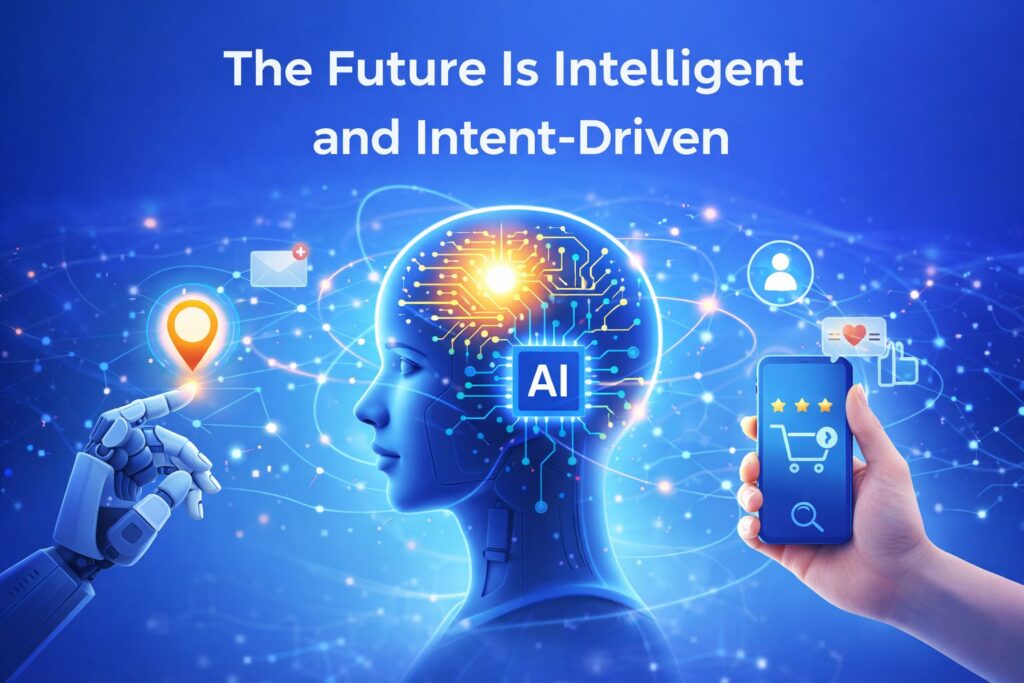
Future Trends: Beyond Hyper-Personalisation 2026
As we move beyond traditional personalization, Hyper-Personalisation 2026 will redefine how brands connect with customers. In 2026, AI-powered customer journey personalisation will extend far beyond basic behavioral tracking to include contextual awareness, real-time emotional cues, and precise micro-moment targeting. This new era of hyper-personalisation 2026 ensures that every digital touchpoint adapts instantly to user intent. With the rise of Emotion AI, businesses can analyze tone, facial expressions, and engagement signals to dynamically tailor messaging and offers. At the same time, zero-party data strategies will become central to digital marketing success, encouraging customers to voluntarily share preferences and interests—enhancing trust, compliance, and personalization accuracy while reducing reliance on third-party data sources.
The future of AI customer journey personalisation is intelligent, intent-driven, and results-focused. Brands that leverage machine learning, predictive analytics, and real-time automation in 2026 will deliver highly relevant, ethical, and scalable customer experiences. This strategic integration of AI in marketing will drive stronger engagement, higher customer retention rates, increased revenue growth, and long-term competitive advantage. As the shift toward AI-driven personalization accelerates, forward-thinking businesses must act now. The transformation is already underway—start leveraging AI to optimize your customer journeys and stay ahead in the evolving digital landscape.