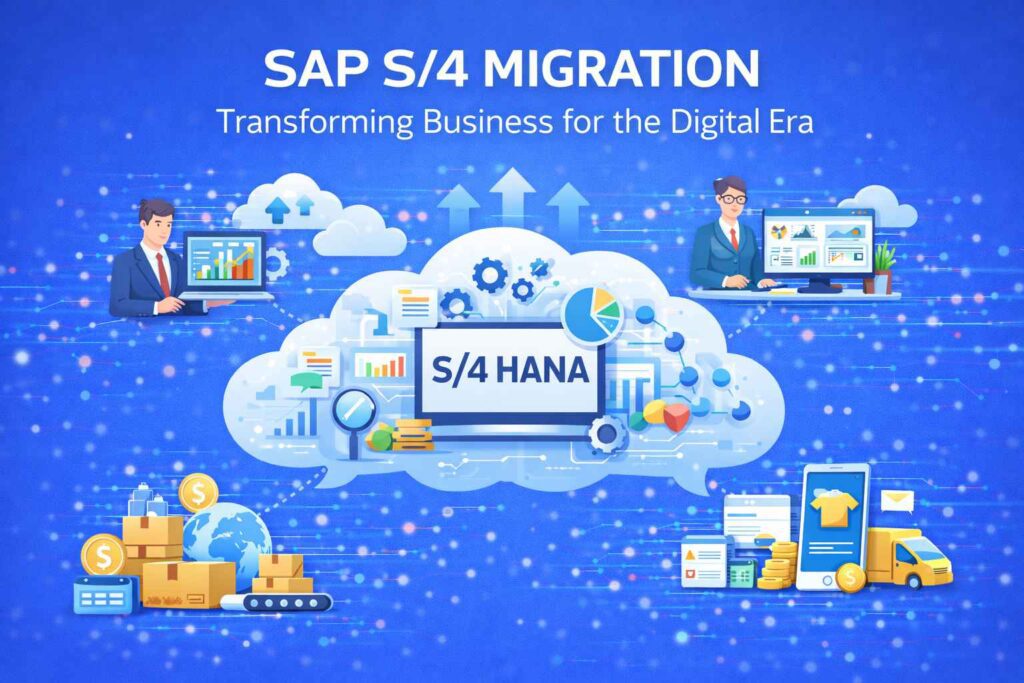
What is SAP S/4 HANA Migration?
Why SAP S/4 HANA Transformation is Critical for Enterprises
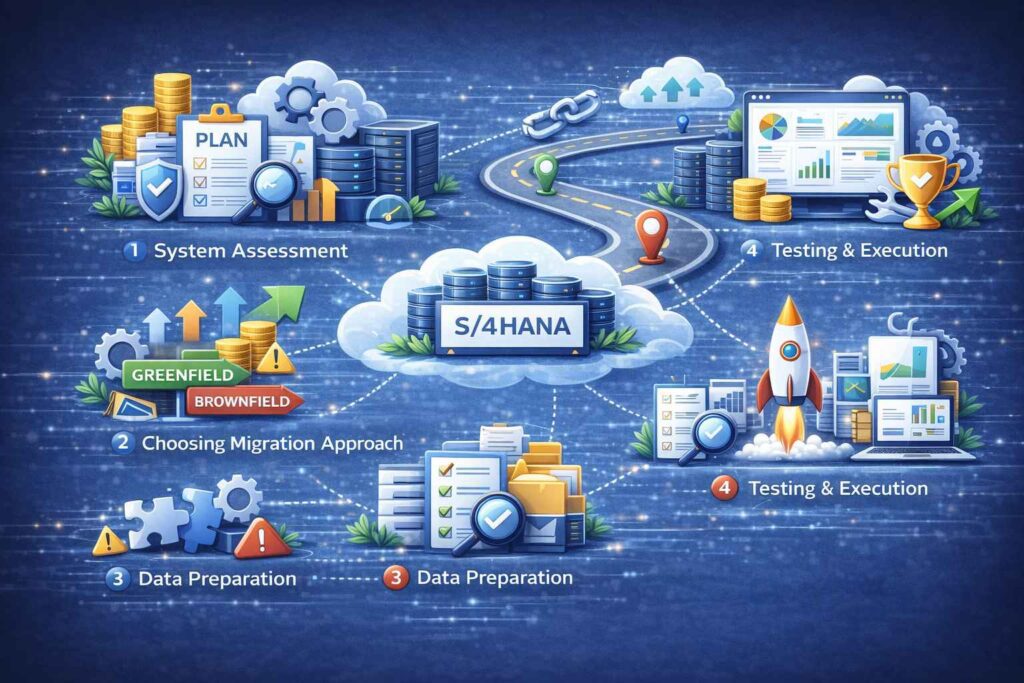
Migration Roadmap
A structured approach ensures long-term success. This process is not a one-time event. Instead, it is a continuous improvement journey. Below is a practical Migration roadmap.
1. System Assessment: To reduce risks, organizations must analyze-
- Current SAP ECC environment
- Custom code complexity
- Data quality
- Integration dependencies
- Hardware readiness
2. Choosing the Right Migration Approach: Choosing the correct approach directly impacts cost, time, and ROI.
- Greenfield Implementation: A fresh start with redesigned processes.
- Brownfield Conversion: System conversion while retaining existing processes.
- Selective Data Transition: A hybrid approach combining both methods.
3. Data Preparation: Data quality determines migration success. During transition, businesses should:
- Remove duplicate records
- Archive outdated data
- Standardize master data
- Validate compliance requirements
4. Testing and Execution: Next, the technical execution begins. Thorough testing minimizes operational disruptions. This phase includes:
- System configuration
- Data migration
- Integration testing
- User acceptance testing
5. Go-Live and Continuous Optimization: After go-live, monitoring becomes essential. Enterprises must:
- Track system performance
- Optimize workforce
- Update security protocols
- Provide ongoing training
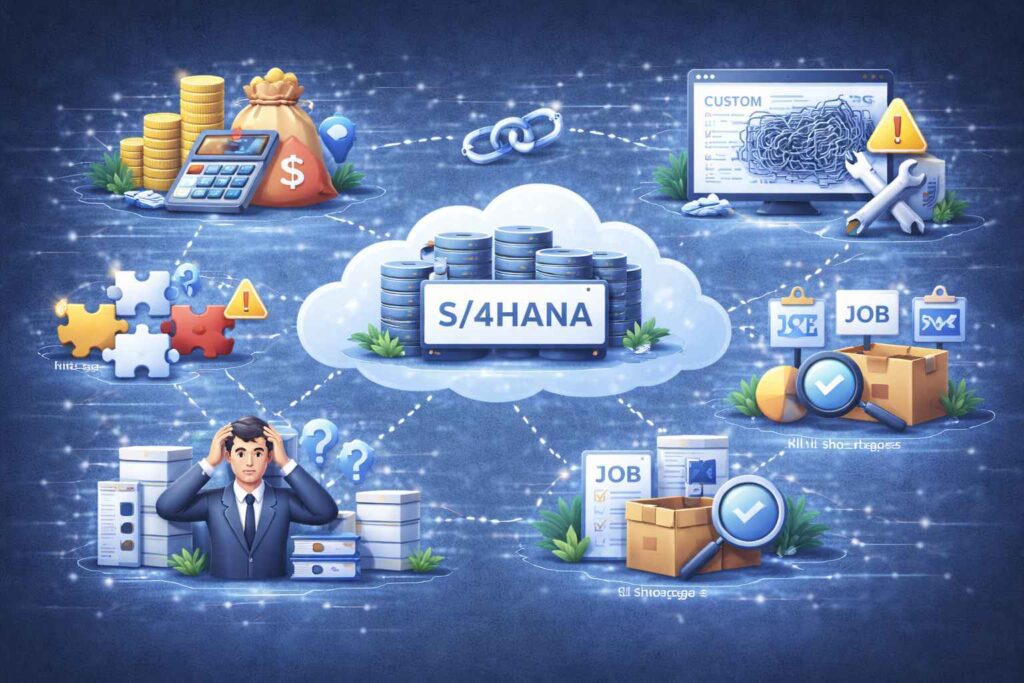
Common Challenges
Although SAP S/4 HANA Migration offers significant benefits, organizations may face:
- High initial investment
- Complex custom code adaptation
- Resistance to organizational change
- Integration risks
- Skill shortages
However, strong leadership and structured planning reduce these challenges significantly.
Business Benefits
After successful SAP S/4 HANA Migration, enterprises typically achieve:
- Faster financial closing cycles
- Improved supply chain visibility
- Real-time operational insights
- Reduced IT complexity
- Long-term cost savings
- Increased competitive advantage
These benefits lead to strategic investment rather than a cost burden.
Future Trends
Looking ahead, SAP S/4 HANA Migration will increasingly integrate:
- Artificial Intelligence
- Predictive analytics
- IoT-enabled supply chains
- Robotic Process Automation
- Cloud-native deployment models
Organizations that adopt this transition early will lead digital transformation in their industries.
Conclusion
In today’s fast-evolving business landscape, organizations must continuously innovate to remain competitive and future-ready. The transition plays a critical role in enabling intelligent enterprise operations, real-time analytics, and data-driven decision-making. By adopting a well-defined migration strategy that aligns with overall business objectives, companies can streamline processes, improve operational efficiency, and build a scalable digital foundation for long-term growth. A structured approach not only minimizes risks but also maximizes return on investment, ensuring sustainable transformation. Now is the ideal time for businesses to accelerate their migration journey and unlock greater agility, performance, and innovation.