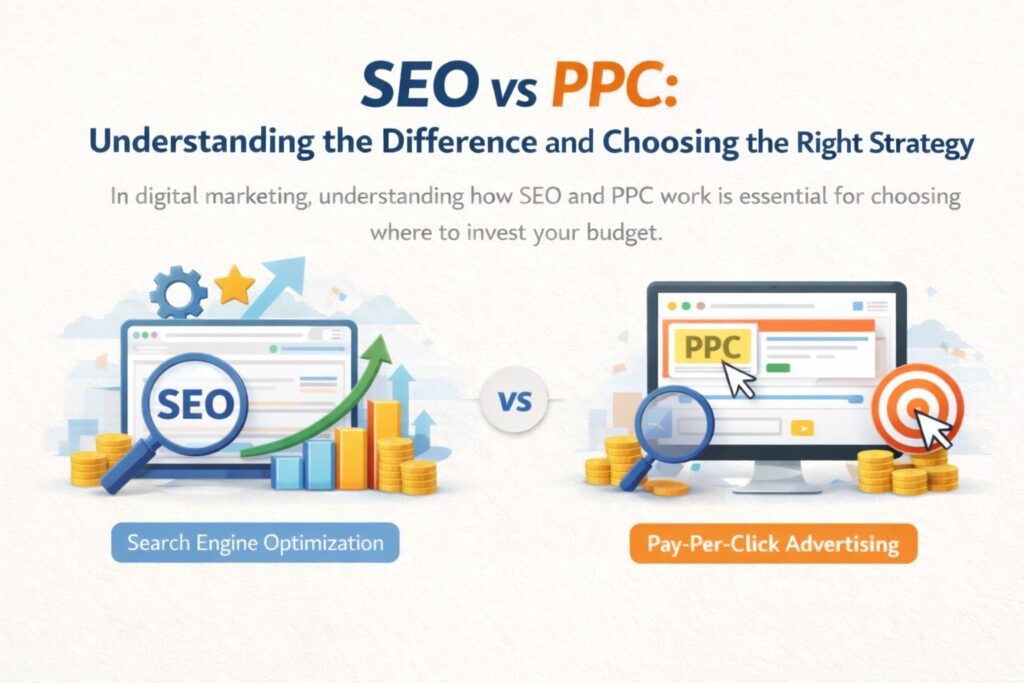
In the digital age, businesses rely heavily on online marketing to reach customers, generate leads, and increase sales. Among the many strategies available, SEO and PPC are two of the most widely used approaches. The discussion around SEO vs PPC often arises because both strategies aim to bring traffic to a website but operate in very different ways.
Understanding how these two marketing methods work can help businesses decide where to invest their time and budget. This blog explains the key differences between SEO and PPC, their benefits, and how they contribute to a strong digital marketing strategy. It also highlights how professional training from institutions like PS Academy can help individuals build expertise in these important digital marketing skills.
What is SEO?
Search Engine Optimization (SEO) refers to the process of improving a website so that it appears higher in organic search results on platforms such as Google Search.
The main goal of SEO is to increase organic traffic, meaning visitors who reach a website naturally through search results rather than paid advertisements.
SEO typically includes several important practices:
- On-page SEO: Optimizing titles, headings, keywords, and website content.
- Technical SEO: Improving site speed, mobile responsiveness, and website structure.
- Off-page SEO: Building backlinks and strengthening website authority.
- Content optimization: Creating useful and relevant content that answers user queries.
For example, when someone searches for a topic like digital marketing course, search engines analyze different websites and rank them according to relevance and quality. Websites that are well optimized have a higher chance of appearing on the first page.
One important aspect of SEO is that results usually take time. However, once a website gains strong rankings, it can continue attracting traffic consistently.
What is PPC?
Pay-Per-Click (PPC) is a digital advertising model where businesses pay a fee each time someone clicks on their ad. These advertisements usually appear above organic search results or on various online platforms.
One of the most popular platforms for PPC advertising is Google Ads.
PPC campaigns allow businesses to:
- Display ads for specific keywords
- Target audiences based on location or interests
- Control advertising budgets
- Generate quick website traffic
For instance, a company running a PPC campaign for digital marketing training can appear at the top of search results almost immediately. This makes PPC a powerful option for businesses that want fast visibility.
However, unlike SEO, traffic from PPC stops once the advertising budget is paused or exhausted.
SEO vs PPC: Major Differences
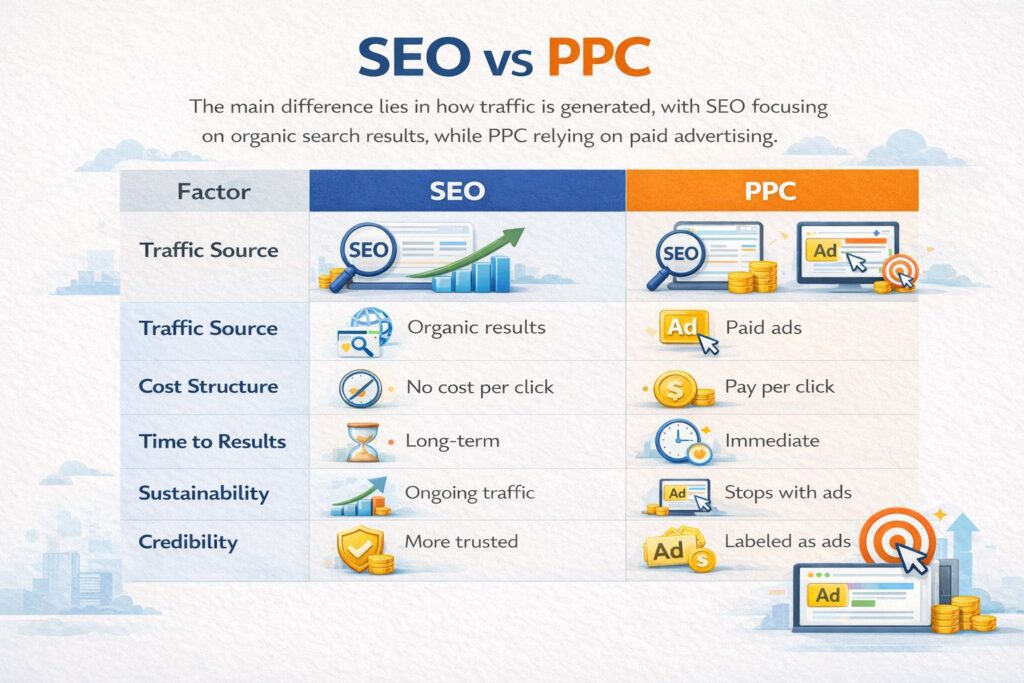
When comparing SEO vs PPC, the main difference lies in how traffic is generated. SEO focuses on organic search results, while PPC relies on paid advertising.
Benefits of SEO
SEO is widely used by businesses that want to build a strong online presence over time.
1. Long-Term Results
Once a website ranks well for important keywords, it can continue attracting visitors without ongoing advertising costs.
2. Increased Credibility
Users often trust organic search results more because they are not paid placements.
3. Cost Efficiency
Although SEO requires consistent effort, it can become more economical in the long run compared to paid advertising.
4. Better Website Quality
SEO encourages businesses to improve website usability, content quality, and loading speed.
Benefits of PPC
PPC offers several advantages, especially for businesses looking for immediate results.
1. Quick Visibility
Ads can appear on search engine results pages as soon as the campaign is activated.
2. Targeted Advertising
Businesses can reach specific audiences based on demographics, location, and search intent.
3. Easy Performance Tracking
Marketing tools such as Google Analytics help track clicks, conversions, and user behavior.
4. Effective for Promotions
PPC campaigns are particularly useful for limited-time offers, product launches, or event promotions.
When Should Businesses Focus on SEO?
SEO works best when businesses want to:
- Build long-term brand visibility
- Generate consistent website traffic
- Strengthen online authority
- Reduce dependency on paid advertising
Content-driven businesses, blogs, and educational platforms often benefit greatly from strong SEO strategies.
When Should Businesses Use PPC?
PPC is ideal for situations where quick results are needed, such as:
- Launching a new product or service
- Running short-term marketing campaigns
- Promoting time-sensitive offers
- Testing new keywords or markets
Because PPC campaigns can be adjusted easily, marketers often use them to experiment with different strategies.
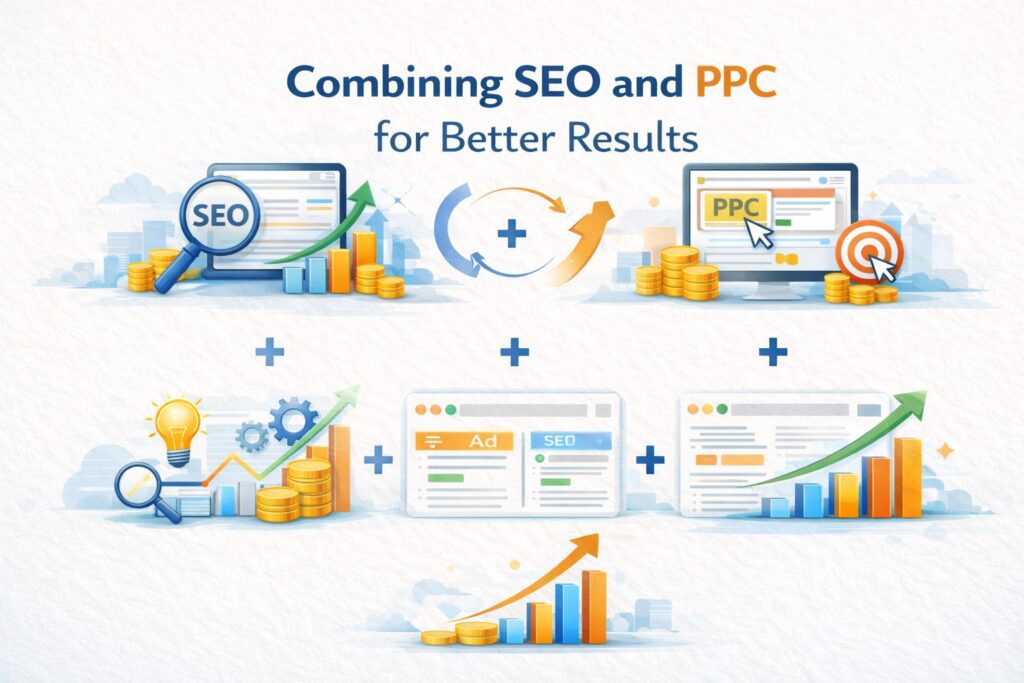
Combining SEO and PPC for Better Results
Rather than choosing between SEO vs PPC, many successful businesses combine both strategies.
For example:
PPC campaigns can bring immediate traffic while SEO builds long-term rankings.
Insights from PPC keyword performance can guide SEO content strategies.
Appearing in both paid and organic search results increases overall visibility.
This integrated approach allows businesses to maximize their digital marketing potential.
Building Digital Marketing Skills Through Training
With the rapid growth of online businesses, the demand for professionals skilled in SEO and PPC is increasing. Understanding keyword research, campaign optimization, and data analysis has become essential for modern marketers.
Institutions like PS Academy provide structured learning programs designed to help students and professionals develop these skills. Training programs typically include practical exercises, real-world projects, and guidance from experienced mentors.
By learning both SEO techniques and PPC advertising strategies, individuals can build a strong foundation for a career in digital marketing.
Conclusion
The comparison between SEO vs PPC highlights two powerful approaches to digital marketing. SEO focuses on improving organic search rankings and delivering long-term traffic, while PPC provides quick visibility through paid advertising.
Businesses often achieve the best results by combining both strategies. SEO builds credibility and sustainable growth, while PPC ensures immediate reach and targeted promotions.
For individuals interested in mastering these strategies, gaining practical training and industry knowledge can make a significant difference. Programs offered by institutions like PS Academy help learners understand how SEO and PPC work together to create effective digital marketing campaigns.