Modern businesses rely on enterprise systems to manage inventory, procurement, and financial transactions efficiently. One of the most widely used enterprise platforms is SAP, which helps organizations integrate their business processes into a single system.
Within SAP’s Material Management module, an important component is the Material Ledger. It plays a crucial role in tracking material prices, supporting multiple currencies, and calculating the actual cost of materials used in production and inventory.
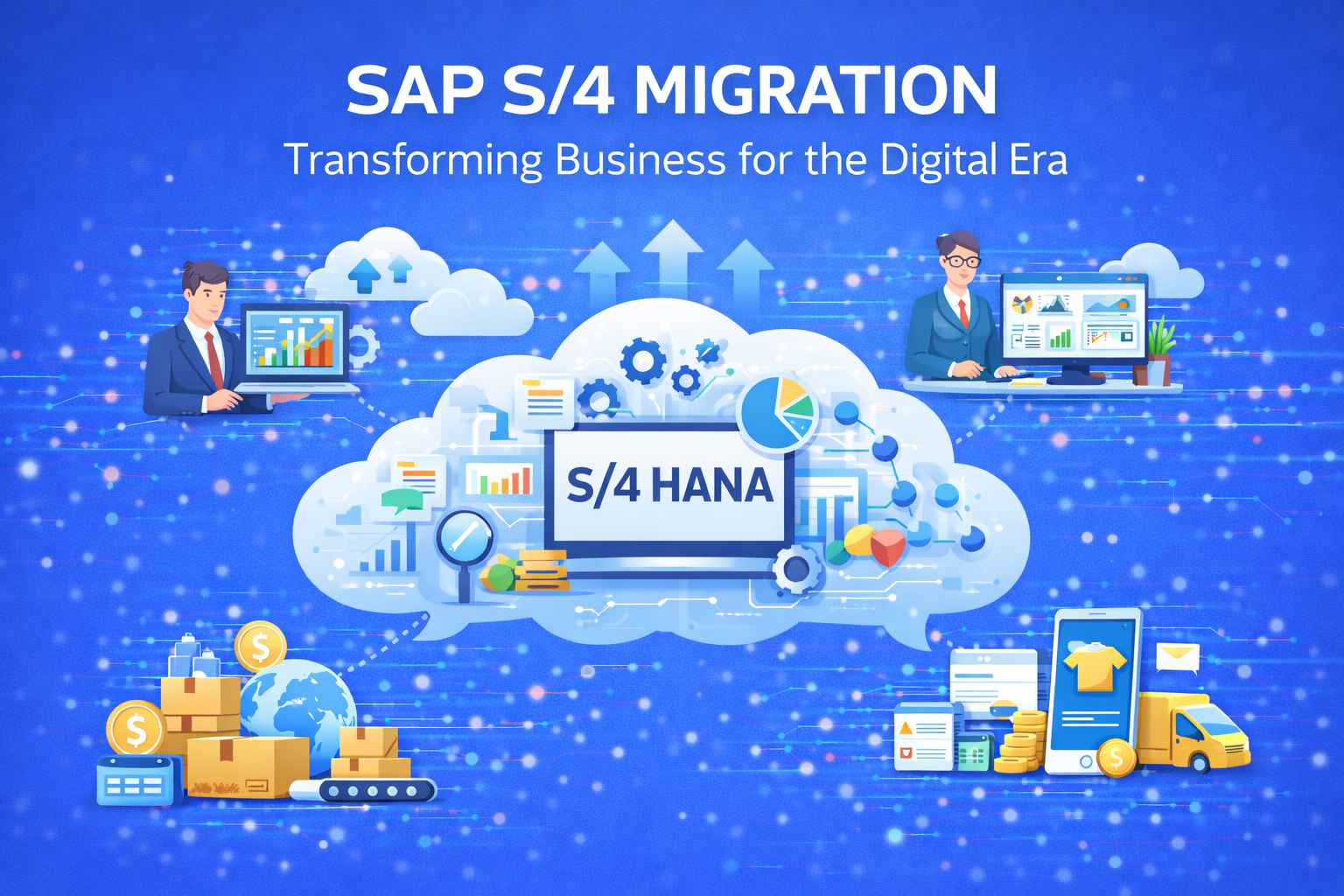
With the introduction of SAP S/4HANA, the Material Ledger has become even more important. In fact, it is now mandatory and always active in the system. This change ensures better financial transparency and more accurate inventory valuation.
In this article, we will explore what the Material Ledger is, how it works, and why it is essential for businesses using SAP for Material Management.
What is Material Ledger in SAP?
Material Ledger is a sub-ledger for materials in SAP that records and tracks the value of materials within an organization.
It works alongside the financial accounting system to provide detailed information about material costs and inventory values. Instead of only tracking quantities of materials, the Material Ledger focuses on tracking prices and cost changes over time.
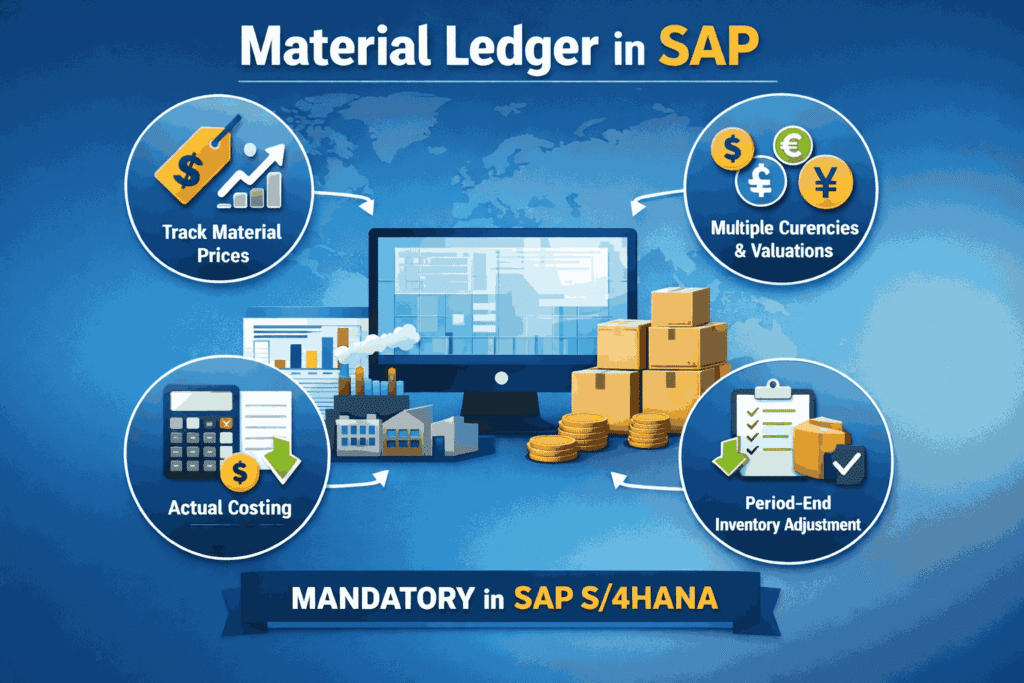
The main functions of Material Ledger include:
- Tracking material prices over different periods
- Supporting multiple currencies and valuations
- Calculating actual cost of materials
- Adjusting inventory values at the end of a financial period
By maintaining this data, companies can analyze how material costs change during production and purchasing activities.
Why Material Ledger is Important in Material Management
Material costs directly affect profitability in industries such as manufacturing, retail, and logistics. Without accurate cost tracking, companies may struggle to calculate the true value of inventory.
The Material Ledger helps solve this problem by providing a detailed record of material cost movements.
Key benefits include:
- Improved inventory valuation accuracy
- Better financial transparency
- Support for global operations with multiple currencies
- Accurate cost calculation for production
Because of these benefits, organizations using SAP rely heavily on the Material Ledger for cost analysis and financial reporting
Key Features of Material Ledger
1. Material Price Tracking
One of the main features of Material Ledger is its ability to track changes in material prices throughout a financial period.
For example, if the cost of raw materials increases due to supplier price changes, the Material Ledger records this change and reflects it in the system.
This allows businesses to monitor cost fluctuations and make informed purchasing decisions.
2. Multiple Currency Support
Many companies operate globally and conduct transactions in different currencies. Material Ledger supports multiple currencies and valuation views, which helps businesses maintain accurate financial records.
This feature is especially useful for multinational organizations that manage procurement and production across different countries.
3. Actual Costing
Another important function of the Material Ledger is Actual Costing. Instead of relying only on standard costing methods, the system calculates the actual cost of materials based on real transactions during a specific period.
Actual costing considers factors such as:
Purchase price changes
Production variances
Inventory adjustments
This provides a more accurate representation of material costs.
4. Period-End Inventory Adjustment
At the end of each financial period, the Material Ledger adjusts inventory values to reflect the actual cost of materials used.
These adjustments ensure that the financial statements show a realistic value of inventory and production costs.
For businesses that deal with large volumes of materials, this process is critical for accurate accounting and financial analysis.
Material Ledger in SAP S/4HANA
With the introduction of SAP S/4HANA, the role of the Material Ledger has changed significantly.
In earlier versions of SAP ERP, companies could choose whether to activate the Material Ledger. However, in SAP S/4HANA, Material Ledger is mandatory and always active.
This change was introduced to support the simplified data model and improved financial reporting capabilities of SAP S/4HANA.
The benefits of this mandatory activation include:
- Real-time inventory valuation
- Better integration with financial accounting
- Improved cost transparency
- Enhanced reporting capabilities
As a result, organizations using SAP S/4HANA automatically benefit from the advanced cost tracking features provided by the Material Ledger.
How Material Ledger Supports Businesses
The Material Ledger plays a key role in helping organizations manage their supply chain and financial processes.
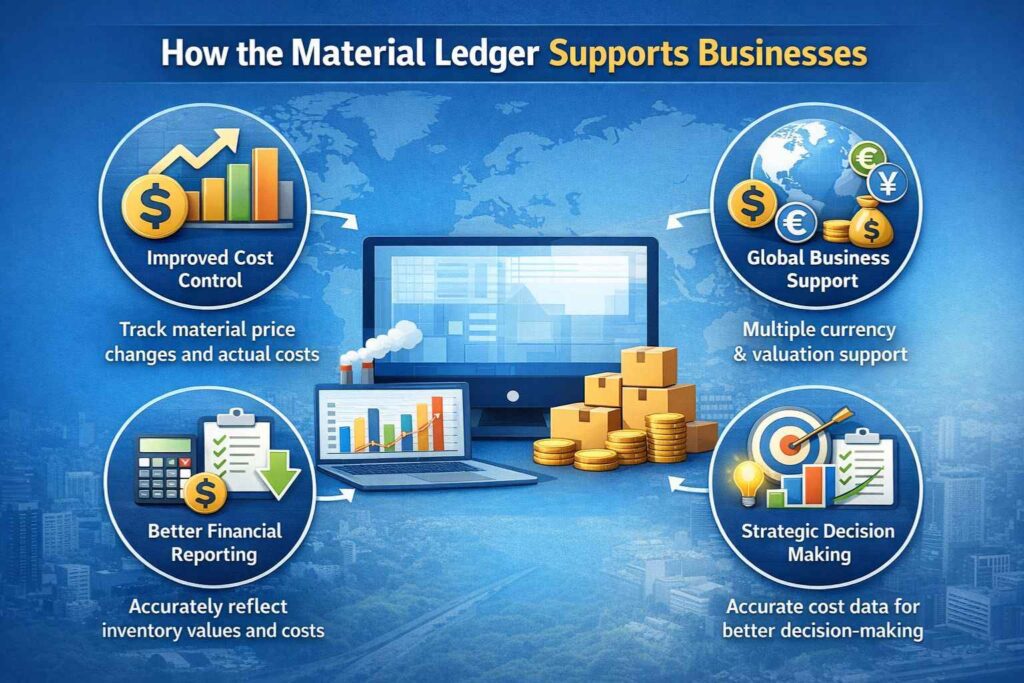
Here are some ways it supports businesses:
Improved Cost Control
By tracking material price changes and actual costs, businesses can better control production expenses.
Better Financial Reporting
Material Ledger ensures that inventory values and production costs are accurately reflected in financial statements.
Global Business Support
With multiple currency and valuation support, companies operating internationally can maintain consistent financial records.
Strategic Decision Making
Accurate cost data helps managers make better decisions related to procurement, pricing, and production planning.
Learning Material Ledger in SAP Training
For professionals interested in SAP careers, understanding the Material Ledger is an important part of SAP Material Management training.
In an SAP MM course, learners typically study:
Material price determination
Actual costing configuration
Inventory valuation processes
Period-end closing activities
These topics help professionals understand how SAP systems manage material costs in real business environments.
Knowledge of Material Ledger can be especially valuable for roles such as:
SAP MM Consultant
SAP Functional Analyst
Supply Chain Specialist
SAP Support Consultant
Conclusion
The Material Ledger is a powerful component of SAP’s Material Management module that helps businesses track material costs, manage inventory valuation, and calculate actual production expenses.
By recording price changes, supporting multiple currencies, and performing actual costing, the Material Ledger provides organizations with accurate financial insights.
With Material Ledger now mandatory in SAP S/4HANA, its importance in enterprise resource planning has grown even further. Companies using SAP rely on it to ensure transparency, accurate inventory valuation, and better financial reporting.
For professionals learning SAP, understanding the Material Ledger is essential for building strong expertise in Material Management and supply chain processes.