

Introduction
In today’s digital world, data is one of the most valuable assets for businesses. Companies use data to make smarter decisions, improve customer experiences, and increase profitability. As a result, the demand for skilled data professionals is growing rapidly across industries. If you want to build a rewarding and future-proof profession, a Data Analytics Career can be an excellent choice. From healthcare and finance to e-commerce and technology, organisations are actively hiring professionals who can transform raw data into meaningful insights. This guide explains everything you need to know about building a successful Data Analytics Career, including essential skills, education requirements, certifications, career paths, and growth opportunities.
Featured Snippet
A successful Data Analytics Career requires strong analytical skills, knowledge of data visualisation tools, proficiency in SQL and Excel, understanding of statistics, and continuous learning. With the right training, certifications, and practical experience, professionals can secure high-paying roles in various industries and enjoy long-term career growth.
Why Choose a Data Analytics Career?
The demand for data professionals is increasing every year. Businesses generate massive amounts of data daily, and they need experts who can analyse it effectively.
Benefits of choosing a Data Analytics Career include:
- High salary potential
- Strong job demand
- Opportunities across industries
- Remote and hybrid work options
- Continuous learning and growth
- Global career opportunities
Moreover, data analytics is considered one of the most stable and future-ready career paths in today’s job market.
Understanding the Role of a Data Analyst
Before starting your Data Analytics Career, it is important to understand what data analysts do.
A data analyst is responsible for:
- Collecting data from multiple sources
- Cleaning and organising datasets
- Analysing trends and patterns
- Creating reports and dashboards
- Supporting business decisions with insights
Their work helps organisations improve performance, reduce risks, and identify new opportunities.

Essential Skills Required for a Data Analytics Career?
- Data Analysis Skills
The foundation of a successful Data Analytics Career is the ability to analyse information and identify meaningful patterns.
Important analytical skills include:
- Data interpretation
- Problem-solving
- Critical thinking
- Pattern recognition
2. Excel Proficiency
Excel remains one of the most widely used tools in analytics.
Key Excel functions include:
- Pivot Tables
- VLOOKUP
- XLOOKUP
- Data Validation
- Charts and Graphs
3. SQL Knowledge
SQL is essential for retrieving and managing data from databases.
You should learn:
- SELECT statements
- JOIN operations
- Aggregations
- Subqueries
- Database management basics
4. Data Visualisation
Visualisation helps communicate insights effectively.
Popular tools include:
- Power BI
- Tableau
- Google Looker Studio
These tools transform complex data into understandable dashboards.
5. Statistics and Mathematics
Statistics forms the backbone of data analysis.
Important concepts include:
- Mean and median
- Probability
- Correlation
- Regression
- Hypothesis testing
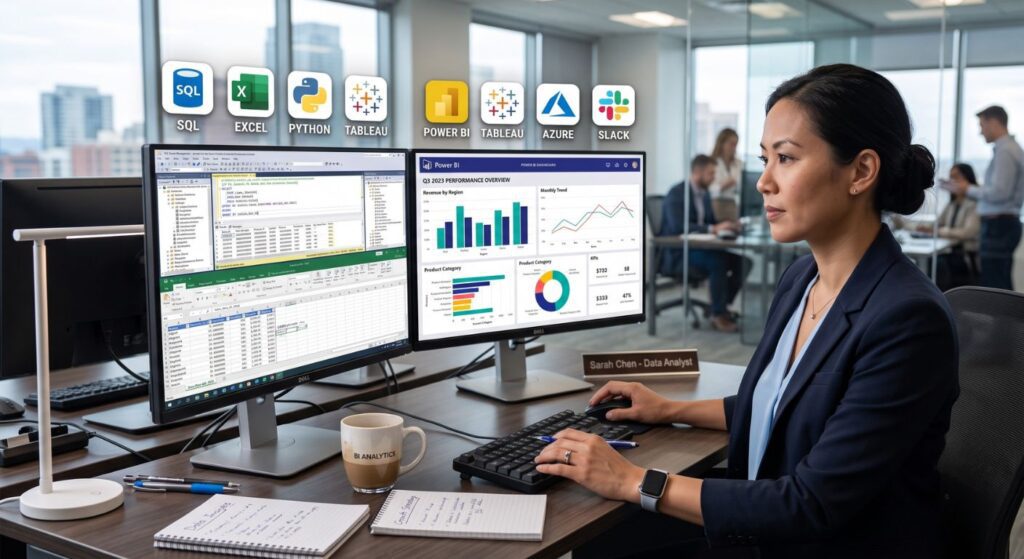
6. Programming Skills
Although not always mandatory, programming can significantly boost your Data Analytics Career.
Recommended languages:
- Python
- R
Python is especially popular because of its powerful analytics libraries.
Educational Path for a Data Analytics Career
You do not always need a specialised degree to enter analytics.
Suitable educational backgrounds include:
- Computer Science
- Mathematics
- Statistics
- Engineering
- Business Analytics
- Economics
However, even non-technical graduates can build a successful Data Analytics Career through professional training and certifications.
Best Certifications for Data Analytics Professionals
Certifications can improve credibility and employability.
Popular options include:
Google Data Analytics Certificate
Ideal for beginners looking to build foundational skills.
Microsoft Power BI Certification
Perfect for professionals interested in data visualisation.
Tableau Certification
Highly valued by employers worldwide.
IBM Data Analyst Professional Certificate
Provides practical industry-oriented knowledge.
Microsoft Azure Data Fundamentals
Useful for understanding cloud-based analytics environments.
Step-by-Step Roadmap to Build a Data Analytics Career
Step 1: Learn the Fundamentals
Start with:
- Data concepts
- Statistics
- Excel
- Business reporting
Step 2: Master SQL
SQL is often a mandatory skill in analytics job descriptions.
Step 3: Learn Visualisation Tools
Focus on Power BI or Tableau to create professional dashboards.
Step 4: Build Projects
Practical projects demonstrate your abilities to employers.
Project ideas:
- Sales dashboard
- Customer behaviour analysis
- Marketing campaign performance report
- Financial trend analysis
Step 5: Create a Portfolio
A strong portfolio can make your profile stand out.
Include:
- Dashboards
- Case studies
- Data reports
- GitHub projects
Step 6: Earn Certifications
Certifications validate your expertise and improve job prospects.
Step 7: Apply for Entry-Level Roles
Look for positions such as:
- Data Analyst
- Business Analyst
- Reporting Analyst
- MIS Executive
- Junior Data Analyst
Common Challenges in a Data Analytics Career
Every profession comes with challenges.
Some common obstacles include:
Learning Multiple Tools
Analytics professionals often need to learn different software platforms.
Data Cleaning
A significant portion of the analysis involves cleaning and preparing data.
Keeping Up with Technology
The analytics industry evolves rapidly. Continuous learning is essential.
However, professionals who stay updated can achieve remarkable career growth.
Industries Hiring Data Analytics Professionals
A Data Analytics Career offers opportunities across diverse sectors.
Healthcare
Analytics helps improve patient outcomes and operational efficiency.
Banking and Finance
Financial institutions use analytics for risk assessment and fraud detection.
E-commerce
Online businesses rely heavily on customer behaviour analysis.
Manufacturing
Companies use analytics to improve productivity and supply chain efficiency.
Information Technology
Tech companies continuously hire data professionals to drive innovation.
Salary Expectations in Data Analytics
Salaries vary depending on experience, location, and skill level.
Typical career progression:
- Entry-Level Data Analyst
- Junior Data Analyst
- Senior Data Analyst
- Analytics Consultant
- Analytics Manager
- Data Scientist
As professionals gain expertise, compensation and responsibilities increase significantly.
Tips to Accelerate Your Data Analytics Career Growth
Follow these proven strategies:
Learn continuously.
- Learn continuously.
- Build practical projects.
- Develop communication skills.
- Network with industry professionals.
- Attend webinars and workshops.
- Follow analytics industry trends.
- Earn relevant certifications.
- Strengthen business understanding.
These actions can help you stand out in a competitive job market.
Future Scope of Data Analytics
The future of analytics looks extremely promising.
Emerging trends include:
- Artificial Intelligence
- Machine Learning
- Predictive Analytics
- Big Data
- Cloud Analytics
- Real-Time Data Processing
As organisations become increasingly data-driven, the demand for analytics professionals will continue to rise.
Conclusion
A successful Data Analytics Career requires the right blend of technical expertise, analytical thinking, hands-on project experience, and a commitment to continuous learning. Whether you are a student, recent graduate, or working professional looking to upskill, now is the perfect time to enter this rapidly growing industry. By mastering essential tools such as Excel, SQL, Power BI, and Python, and gaining practical exposure through real-world projects, you can build a strong foundation for long-term career success. At PS Academy, aspiring data professionals receive industry-focused training, expert guidance, and practical learning opportunities that help them develop job-ready skills and confidently pursue a successful Data Analytics Career in today’s competitive market