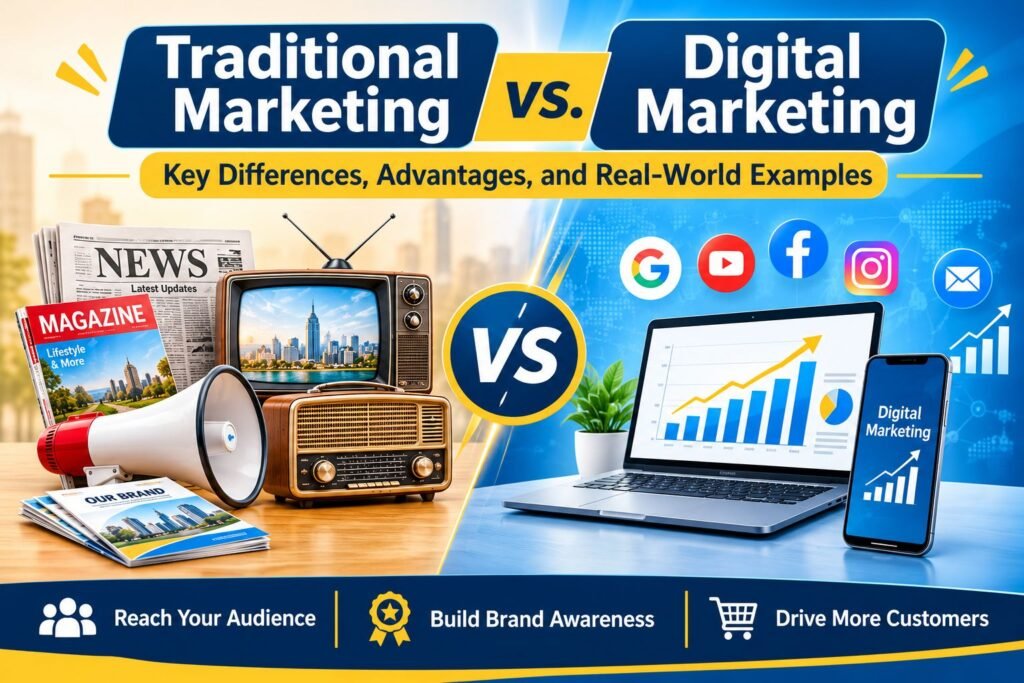
Every business needs a way to reach potential customers. A clothing store wants to attract shoppers, a restaurant wants more people to try its food, and a coaching institute wants students to inquire about its courses. Choosing between Traditional Marketing vs. Digital Marketing is an important part of deciding how to promote a business, connect with its audience, and communicate the value of its products or services.
In the past, businesses mainly depended on newspapers, television, radio, banners, and printed advertisements to promote their products and services. Today, the internet has introduced more ways to connect with customers through websites, search engines, social media, and online advertising.
These approaches are known as traditional marketing and digital marketing. Both aim to promote a business, build brand awareness, and attract customers. However, they differ in the channels they use, the audiences they reach, and the ways businesses measure their results.
Understanding the difference between traditional marketing and digital marketing can help students, business owners, and beginners make better decisions about promotional strategies.
Let’s explore how these two approaches work, their common methods, advantages, limitations, and practical applications.
What Is Traditional Marketing?
Traditional marketing refers to promoting products, services, or brands through offline channels. It uses advertising methods that do not depend on the internet, such as newspapers, magazines, television, radio, billboards, and printed materials.
For example, imagine a new restaurant opening in a residential area. The owner may distribute flyers in nearby neighborhoods, display banners around the market, or advertise in a local newspaper. These activities introduce the restaurant to people who live or travel nearby.
Traditional marketing is often useful for businesses that want to build visibility in a particular geographical area or communicate with audiences through familiar offline media.
To understand traditional marketing vs. digital marketing, it is useful to first explore how offline promotion works.
Common Types of Traditional Marketing
Businesses use different traditional marketing methods depending on their products, target customers, and advertising objectives.
1. Newspaper and Magazine Advertising
Companies publish advertisements in newspapers and magazines to share information about their products, services, events, or special offers.
For example, a furniture showroom may advertise a festive discount in a local newspaper to attract people planning to purchase new furniture.
2. Television Advertising
Television advertisements use video, sound, and storytelling to introduce products and brands to viewers. Companies often create short commercials that appear during television programs.
A food brand, for instance, may show an advertisement demonstrating how its product can be used in everyday meals.
3. Radio Advertising
Radio advertising allows businesses to promote their offerings through audio announcements and commercials. It can be useful for reaching listeners in specific cities or regions.
A local car dealership might announce a weekend exchange offer through a regional radio station.
4. Billboards and Banners
Billboards and banners display promotional messages in public places, including roadsides, markets, shopping areas, and commercial locations.
A newly opened clothing store may place banners near a busy market to inform shoppers about its opening offers.
5. Brochures and Flyers
Brochures and flyers are printed materials that explain a business’s products, services, contact details, or promotional offers.
For example, a coaching institute may distribute course brochures to students attending an educational event.
6. Direct Mail
Direct mail involves sending printed promotional materials, such as letters, catalogues, and offer announcements, to selected homes or customers.
A furniture company might send a catalogue to previous customers to introduce its latest collection.
7. Exhibitions and Events
Businesses participate in exhibitions, trade fairs, and public events to display their products and communicate directly with visitors.
For example, an electronics company may demonstrate its latest products at a trade exhibition so visitors can see how they work.
What Is Digital Marketing?
Digital marketing is the process of promoting a business, product, or service through internet-based platforms and digital channels. It helps businesses connect with potential customers using websites, search engines, social media, email, and online advertisements.
For example, a clothing store can use Instagram to display its latest collection, a restaurant can share its menu through its website, and a coaching institute can publish course information online to attract student inquiries.
Unlike offline advertising, digital marketing gives businesses opportunities to communicate with online audiences, share updates, promote their offerings, and understand how people respond to their campaigns.
Another important part of traditional marketing vs. digital marketing is the use of internet-based promotional channels.
Common Types of Digital Marketing
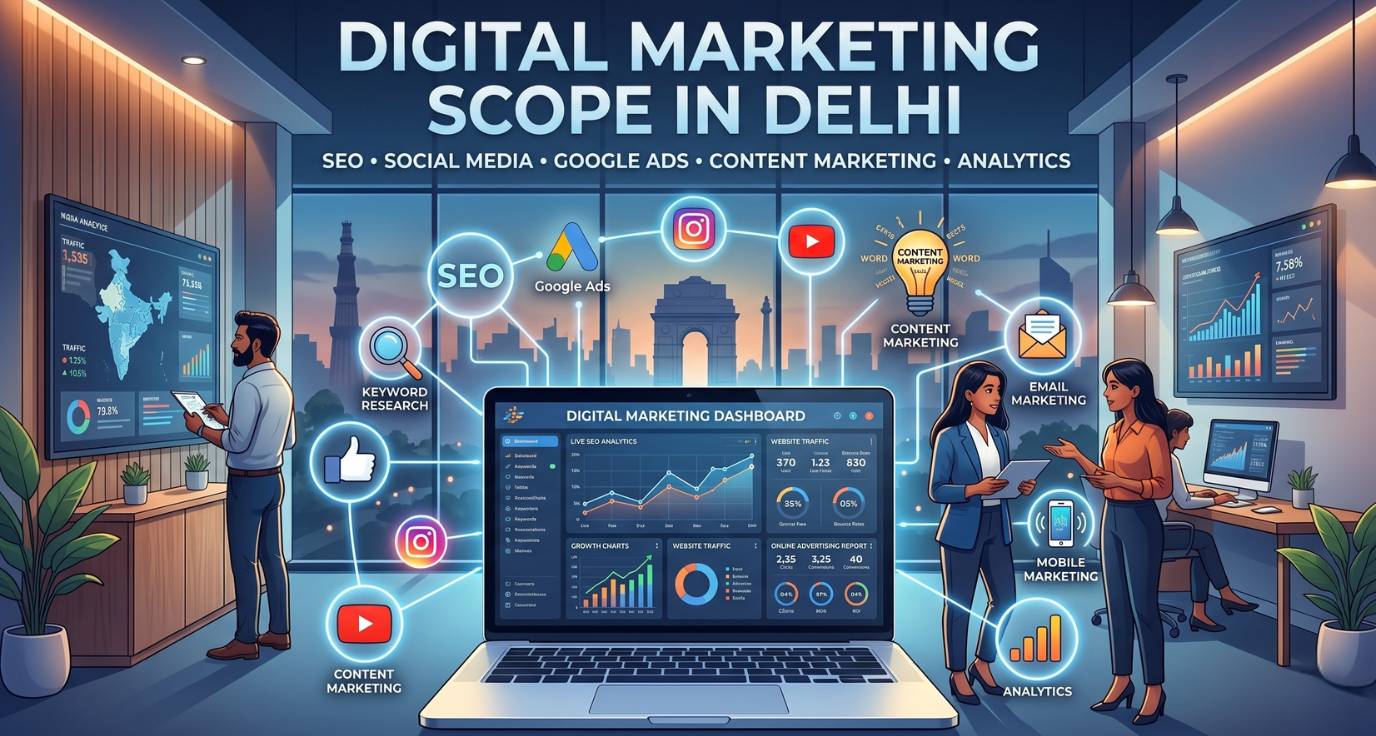
Digital marketing includes several methods. Each serves a different purpose, from improving website visibility to connecting with customers through online platforms.
1. Search Engine Optimization (SEO)
Search Engine Optimization, commonly called SEO, involves improving a website so that its pages can appear more prominently in relevant search engine results.
For example, when someone searches for “best furniture shop in Delhi,” a furniture business with relevant website content and effective SEO may have an opportunity to appear in those results.
SEO activities include keyword research, content optimization, improving website structure, internal linking, and technical improvements.
2. Social Media Marketing
Social media marketing involves using platforms such as Instagram, Facebook, LinkedIn, and YouTube to promote a business and communicate with its audience.
A clothing store may share product photographs, styling ideas, customer feedback, and information about new collections to keep followers interested.
Businesses can use both organic posts and paid social media campaigns to reach potential customers.
3. Pay-Per-Click Advertising (PPC)
Pay-Per-Click advertising is a form of online advertising in which advertisers generally pay when someone clicks on their advertisement.
Google Ads is a common example. A furniture showroom can create an advertisement targeting people searching for furniture stores or specific furniture products in its service area.
PPC campaigns can be adjusted according to factors such as location, search terms, audience, and advertising budget.
4. Content Marketing
Content marketing focuses on creating and publishing useful information that attracts people who may be interested in a business. Instead of only promoting products or services, businesses share content that answers questions, explains topics, and helps readers make informed decisions.
Common content formats include blog articles, how-to guides, videos, infographics, product explanations, and case studies.
5. Email Marketing
Email marketing allows businesses to share information directly with people who have subscribed or otherwise agreed to receive their communications.
A company might send regular newsletters, product announcements, service updates, or details about upcoming promotions.
6. Influencer and Affiliate Marketing
Influencer marketing involves collaborating with online creators who introduce products or services to their followers. Affiliate marketing, on the other hand, involves partners who earn a commission based on agreed promotional results.
For example, a skincare company may collaborate with a beauty creator to review one of its products, while an affiliate publisher may share a tracked product link with their audience.
Traditional Marketing vs. Digital Marketing: Key Differences
The main difference between traditional marketing and digital marketing is the way businesses communicate with potential customers. Traditional marketing uses offline channels, while digital marketing relies on internet-based platforms.
Both approaches have their own uses. The right choice depends on the business, its target audience, marketing objectives, and available resources.
1. Marketing Channels
On the one hand, traditional marketing communicates through offline media, such as television, newspapers, and printed advertisements. On the other hand, digital marketing uses online platforms, including websites, social networks, search engines, and email.
2. Audience Reach
A newspaper advertisement may mainly reach readers of a particular publication, while a local banner attracts people passing through that area. Digital campaigns can reach audiences in selected locations or expand to other regions, depending on the campaign settings.
3. Cost Considerations
However, the cost difference is not always straightforward. Traditional advertising may require spending on printing, production, and media placement. Digital marketing also requires investment when businesses run paid campaigns, but they can begin with organic activities such as publishing social media posts or creating website content.
Neither approach is automatically cheaper. The total cost depends on the campaign, platform, audience, and business objectives.
4. Audience Targeting
Traditional marketing generally reaches people through the location or audience of the selected media. Digital platforms offer additional targeting options, allowing businesses to select audiences based on factors such as location, interests, and online behaviour.
5. Customer Interaction
In comparison, digital platforms allow customers to respond through comments, direct messages, website inquiries, reviews, and other interactive features.
Traditional advertisements mainly communicate a promotional message. Digital platforms allow customers to respond through comments, direct messages, website inquiries, reviews, and other interactive features.
6. Performance Measurement
While measuring the exact impact of a newspaper advertisement or billboard can be difficult, digital marketing tools can provide information about website visits, advertisement clicks, form submissions, and other campaign activities.
7. Campaign Flexibility
Changing a printed advertisement may require a new design and printing arrangement. In digital marketing, businesses can often update website content, advertisements, and social media posts without repeating the entire production process.
Advantages and Disadvantages of Traditional Marketing
Traditional marketing remains relevant for businesses that want to communicate through offline media. However, its usefulness depends on the type of campaign and the audience being targeted.
Advantages of Traditional Marketing
Strong local presence: Local newspapers, radio stations, and outdoor displays help businesses connect with people in specific areas.
Tangible promotional materials: Brochures, catalogues, and printed advertisements give customers something physical they can read and keep for future reference.
Wide broadcast exposure: Television and radio advertisements can introduce a brand, product, or service to a large audience.
Familiar advertising formats: Many customers are comfortable with traditional media, such as newspapers, magazines, television, and radio.
Suitable for local businesses: Retail shops, restaurants, and service providers can use local advertising to build awareness within their communities.
Disadvantages of Traditional Marketing
Limited direct interaction: Print and broadcast advertisements generally provide fewer opportunities for customers to respond immediately.
Difficult to measure results: Tracking the exact number of customers generated through an offline advertisement can be challenging.
Additional production work: Traditional campaigns may require designing, printing, recording, and coordinating with media providers.
Limited flexibility: Updating a printed advertisement or an already scheduled broadcast campaign may require additional time and arrangements.
Less precise audience targeting: Some offline channels reach a broad audience, including people who may not be interested in the advertised product or service.
Advantages and Disadvantages of Digital Marketing
Digital marketing provides businesses with several ways to promote their offerings through online channels. Additionally, it gives them opportunities to interact with customers and review campaign performance.
Advantages of Digital Marketing
Flexible audience targeting: Businesses can create campaigns for selected locations, age groups, interests, and other available audience characteristics.
Measurable campaign activity: Analytics platforms can help businesses understand website traffic, advertisement clicks, enquiries, and conversions.
Multiple budget options: Businesses can start with organic activities or allocate budgets to paid advertising based on their goals.
Direct customer communication: Social media, email, and websites allow businesses to respond to questions and receive customer feedback.
Wider geographical reach: Online platforms make it possible to connect with customers beyond a business’s immediate location.
Content can remain accessible: Website pages, blog articles, and social media content can continue to provide information after publication.
Disadvantages of Digital Marketing
High competition: Businesses often compete with many other brands for online visibility and customer attention.
Requires regular attention: Websites, social media pages, and advertising campaigns need ongoing updates and monitoring.
Learning is necessary: Effective digital marketing involves understanding platforms, content, audience behaviour, and performance data.
Paid campaigns require budget management: Advertising expenses can increase without careful targeting, monitoring, and optimization.
Results may take time: Activities such as SEO and organic content marketing generally require consistent effort before meaningful results become visible.
Platform changes can affect campaigns: Changes to search engine algorithms, advertising policies, or social media features may influence marketing activities.
Real-World Examples of Traditional and Digital Marketing
Understanding marketing methods becomes easier when we compare how businesses promote the same products or services through different channels.
Example 1: Restaurant Promotion
A restaurant opening in a residential area can use traditional marketing by distributing printed menus, displaying banners, and advertising in a local newspaper.
Through digital marketing, the same restaurant can create social media profiles, share food photographs, publish its menu online, and run location-based advertisements.
Both methods introduce the restaurant to potential customers, but digital platforms also provide opportunities for people to interact with the business and inquire about its offerings.
Example 2: Furniture Showroom
A furniture showroom can promote a seasonal sale through newspaper advertisements, brochures, and outdoor banners.
Using digital marketing, it can create a website displaying its furniture collection, publish product photographs on social media, and run Google Ads for relevant searches such as furniture showroom near me.
The online approach also gives interested customers a way to explore available products before visiting the showroom.
Example 3: Coaching Institute
A coaching institute may use traditional marketing by putting up banners near educational institutions, distributing brochures, and participating in education fairs.
Its digital marketing activities may include publishing course information on its website, writing educational blogs, sharing student-related updates, and running advertisements to generate inquiries.
These online activities help prospective students find information about the institute when they are researching learning opportunities.
Example 4: Clothing Store
A clothing retailer can advertise festive discounts through newspaper inserts, posters, and printed promotional material. On digital platforms, the same store can upload product images, share styling videos, announce new arrivals, and promote offers through Instagram and Facebook.
Customers can view the collection online and contact the store to ask about products and availability.
Which Marketing Approach Is Better for Businesses?
There is no single best choice between traditional and digital marketing. The right approach depends on a business’s target audience, location, objectives, products, and budget.
Traditional marketing can help businesses build local awareness through newspapers, radio, and outdoor advertising. In contrast, digital marketing is useful for improving online visibility, reaching specific audiences, and generating enquiries.
For example, a local grocery store may benefit from flyers and banners, while an online clothing brand may focus more on social media, SEO, and online advertising.
Before choosing an approach, businesses should consider:
Target audience: Where do potential customers usually find information?
Business location: Does the business serve a local community or customers across different regions?
Marketing objective: Is the goal to build local awareness, increase website traffic, generate inquiries, or drive online sales?
Available budget: How much can the business reasonably spend on promotion?
Measurement needs: How will the business evaluate campaign performance?
Considering these factors can help businesses use their marketing resources more effectively. Therefore, the right approach should be selected according to the business’s requirements.
Can Traditional and Digital Marketing Work Together?
Yes. In fact, traditional and digital marketing can complement each other when businesses use them as part of a coordinated promotional strategy.
A business does not always need to choose only one approach. It can use offline advertising to attract attention and digital platforms to provide additional information or encourage customer inquiries.
For example, a furniture showroom can display a newspaper advertisement featuring a festive offer. The advertisement can also mention the showroom’s website or social media page, where customers can explore product collections and contact the business.
Similarly, a coaching institute can distribute brochures at an education fair while directing interested students to its website for course information and enquiry details.
Combining both approaches can help businesses maintain an offline presence while making use of online communication and measurement tools.
How AI Is Changing Digital Marketing
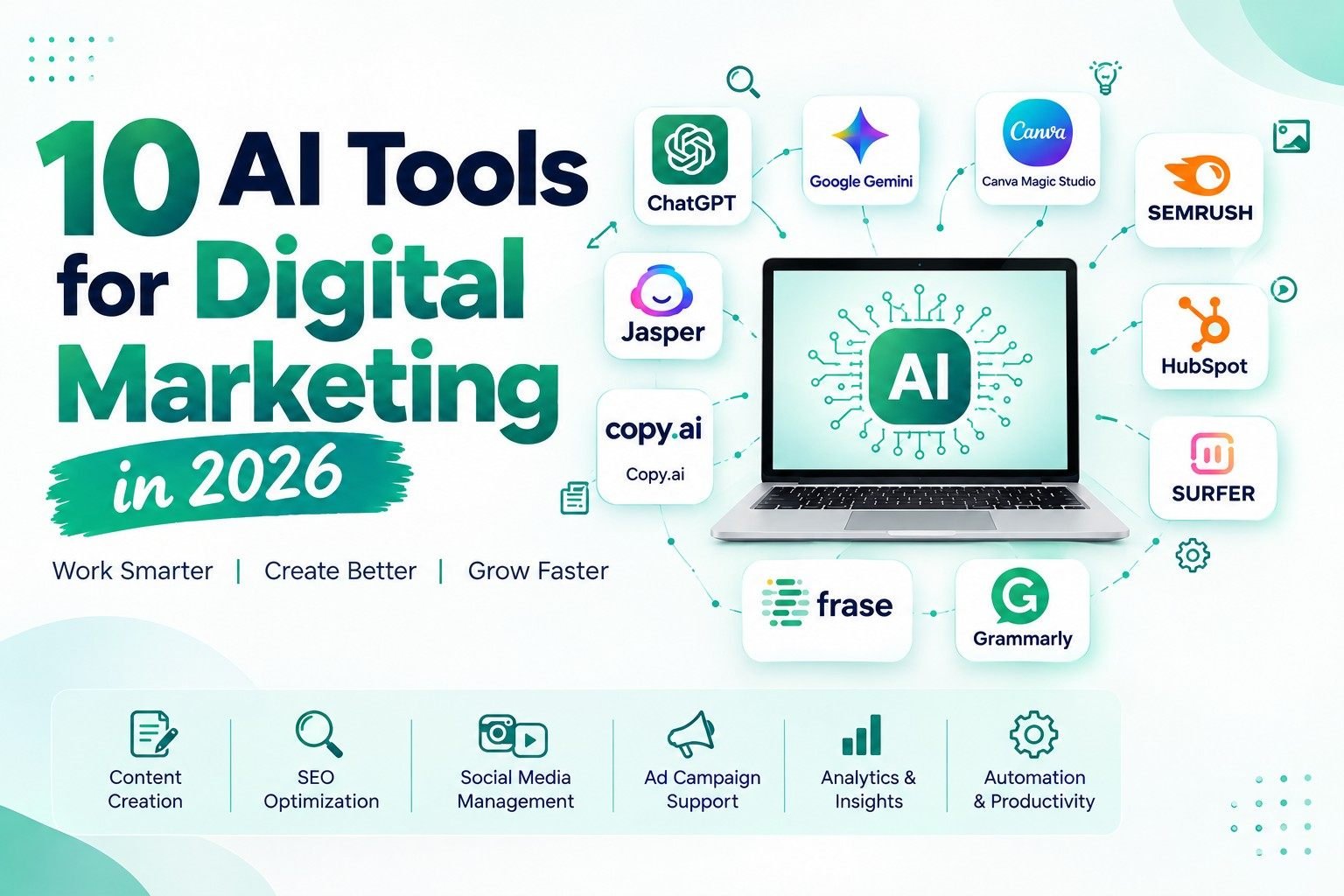
Artificial Intelligence (AI) is becoming an important part of digital marketing. It helps marketers work with information, create content, understand customer behavior, and manage certain marketing activities more efficiently.
Here are some ways AI is being used in digital marketing:
1. Content Creation
AI tools can help marketers generate content ideas, prepare initial drafts, create outlines, and improve written material. Human review remains important to check accuracy, originality, tone, and usefulness.
2. Customer Support
AI-powered chatbots can answer common questions, share basic information, and guide website visitors towards relevant pages or enquiry options.
3. Audience Analysis
AI-based tools can help marketers analyse customer interactions and identify patterns that may support audience segmentation and campaign planning.
4. Advertising Optimization
Some advertising platforms use AI and machine learning to help automate bidding, identify potential audiences, and optimize campaign delivery according to available data and campaign objectives.
5. Personalized Communication
Businesses can use AI-supported tools to organize customer information and create more relevant communication, such as product suggestions or tailored email messages.
AI does not replace the need for marketing knowledge. Marketers still need to understand their audience, choose suitable strategies, review information, and make responsible decisions.
Skills Required to Learn Digital Marketing
People interested in digital marketing can start by learning its basic concepts and gradually developing practical skills. Understanding different marketing channels is important before planning campaigns.
Some essential digital marketing skills include:
Search Engine Optimization (SEO): Learning keyword research, on-page SEO, technical SEO, and link-building fundamentals.
Content Marketing: Creating useful blog posts, website content, social media captions, and other marketing materials.
Social Media Marketing: Planning content, managing social media pages, and communicating with online audiences.
Google Ads: Learning how to create, manage, and monitor paid search campaigns.
Email Marketing: Understanding how businesses communicate with subscribers and customers through email.
Analytics: Interpreting website and campaign data to understand user activity and marketing performance.
AI Tools: Exploring how AI supports content planning, research, analysis, and other marketing tasks.
Beginners who want structured learning can explore the Foundation AI-Integrated Digital Marketing Course at PS Academy to learn more about the available course.
Conclusion
Both traditional and digital marketing help businesses reach potential customers, but they use different promotional channels. Traditional marketing depends on offline methods like newspaper ads, television commercials, radio promotions, and banners, whereas digital marketing uses online platforms such as websites, search engines, social media, email, and paid advertisements.
Ultimately, both approaches can support business promotion when selected according to the target audience and marketing objectives. For example, some businesses may benefit from local offline advertising, while others may need a stronger online presence. In many cases, combining both approaches can also help businesses reach customers through different channels
For students and beginners, understanding these differences is a useful starting point for learning how marketing works and exploring the different opportunities available in the digital marketing field.
Frequently Asked Questions (FAQs)
1. How Do Traditional Marketing and Digital Marketing Differ?
Traditional marketing uses offline advertising methods, including newspapers, television, radio, and banners, to promote products and services. Digital marketing, in contrast, connects businesses with potential customers through internet-based platforms, including websites, search engines, social networks, and email.
2. Which is more cost-effective: traditional marketing or digital marketing?
The cost depends on the type of campaign, audience, and business objectives. Digital marketing offers flexible budget options, while traditional advertising may involve printing, production, and media placement costs. Businesses should compare the expected value and overall campaign expenses before deciding.
3. Can small businesses use digital marketing?
Yes. Small businesses can use digital channels to build an online presence, share product information, communicate with customers, and promote their services. They can begin with activities such as creating a business website or publishing social media content.
4. Is digital marketing replacing traditional marketing?
Digital marketing has changed how businesses reach customers, but traditional marketing is still used by many companies. The two approaches serve different purposes and can work together as part of an overall marketing plan.
5. Is digital marketing a good skill for beginners to learn?
Digital marketing can be a useful skill for beginners interested in online promotion, content creation, SEO, social media, and advertising. Starting with the fundamentals and gaining practical experience can help learners understand how businesses use digital channels.