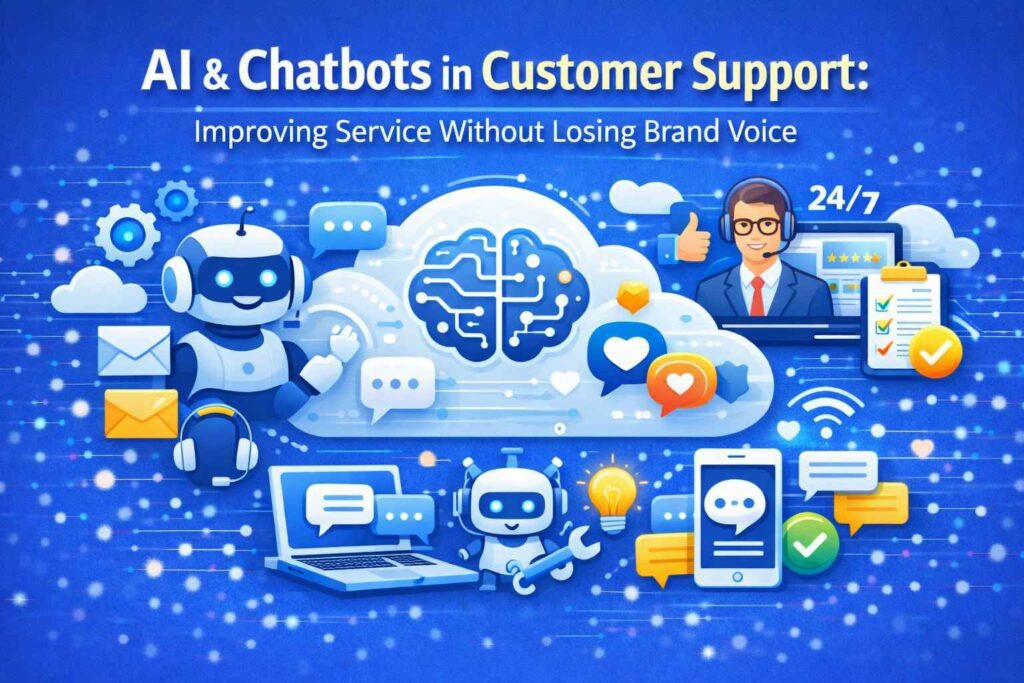
AI & Chatbots: Enhancing Customer Support Without Losing Brand Voice
Customer expectations today are higher than ever. People want quick answers, personalized help, and support at any time of the day. For businesses, delivering this level of service consistently can be difficult.
This is where AI-powered chatbots are making a real difference.
With technologies like Artificial Intelligence and Natural Language Processing, companies can automate large parts of their customer support while still maintaining meaningful interactions with customers.
However, many businesses worry about one important thing: “Will automation make their brand sound robotic?” The good news is that modern AI systems are designed to communicate in a way that reflects your brand’s tone and personality. When used correctly, chatbots can improve support efficiency without losing the human touch that customers appreciate.
In this article, we will explore how AI chatbots work, their benefits, and how businesses can use them while maintaining a consistent brand voice.
What Are AI Chatbots?
AI chatbots are digital tools designed to communicate with customers through text or voice. They use technologies like machine learning and language processing to understand questions and provide helpful responses.
Unlike older rule-based bots that follow strict scripts, modern AI chatbots can understand context and respond more naturally.
Many businesses use platforms such as Intercom, Drift, and Zendesk to manage automated customer conversations.
These tools allow companies to support customers on websites, mobile apps, and social media platforms from a single system.
Why Businesses Are Turning to AI Chatbots
AI chatbots are quickly becoming a key part of modern customer service strategies. They help companies respond faster and manage growing customer expectations.
Here are some of the biggest advantages.
1. Support That’s Always Available
Customers don’t want to wait for business hours to get help. Chatbots provide assistance 24/7, ensuring that users can get answers whenever they need them.
2. Faster Responses
Many customer questions are repetitive, such as order tracking, delivery timelines, or account information. Chatbots can handle these instantly, reducing wait times.
3. Lower Support Costs
Automating common queries helps businesses manage large volumes of customer interactions without expanding their support teams.
4. Better Customer Experience
When chatbots handle routine tasks, human agents can focus on complex issues that require personal attention. This leads to a better overall experience for customers.
The Real Challenge: Protecting Your Brand Voice
Every brand has a unique way of communicating. Some brands sound professional and formal, while others prefer a friendly and casual tone.
Your brand voice reflects your identity and plays an important role in building trust with customers.
For example:
* A tech startup may communicate in a simple and friendly tone
* A financial institution may use a formal and trustworthy voice
* A lifestyle brand may adopt a fun and energetic style
When automation is introduced, businesses worry that chatbot responses might sound generic or mechanical. Maintaining brand voice requires thoughtful planning and proper chatbot training.
How AI Chatbots Can Maintain Brand Personality
Modern chatbot systems can be customized to match a company’s communication style. Here are some practical ways businesses can ensure their chatbot reflects their brand voice.
1. Train the Chatbot Using Brand Content
The best way to maintain brand tone is to train chatbots using existing company content. This can include:
* website copy
* email communication
* customer support responses
* frequently asked questions
By learning from this material, the AI can replicate the brand’s natural tone when interacting with customers.
2. Design Conversations Carefully
The way a chatbot communicates matters. Simple adjustments can make interactions feel more natural.
For example, instead of saying:
“Your request has been processed.”
A more conversational response could be:
“Good news! Your request has been completed. Let us know if there’s anything else we can help with.”
These small changes make conversations feel more human and approachable.
3. Combine AI With Human Support
AI chatbots work best when they complement human agents rather than replace them.
A balanced approach usually works best:
* Chatbots handle simple or repetitive questions
* Human agents manage complex or sensitive issues
This ensures efficiency while maintaining a personal connection with customers.
4. Create Clear Brand Voice Guidelines
Businesses should develop clear chatbot communication guidelines that define:
* tone of voice
* vocabulary and phrasing
* level of formality
* style of responses
These guidelines help ensure that every automated interaction stays consistent with the brand’s identity.
Common Uses of AI Chatbots
AI chatbots are used across many industries to improve customer service and streamline communication.
E-commerce Assistance
Online stores use chatbots to help customers track orders, check product availability, and answer common questions.
2. Lead Generation
Marketing teams use chatbots to engage website visitors, qualify potential leads, and guide users through the sales process.
3. Appointment Scheduling
Service-based businesses use chatbots to automate booking systems and manage appointments efficiently.
4. Customer Onboarding
Chatbots can guide new users through product features, making it easier for customers to get started.
Personalization Through AI
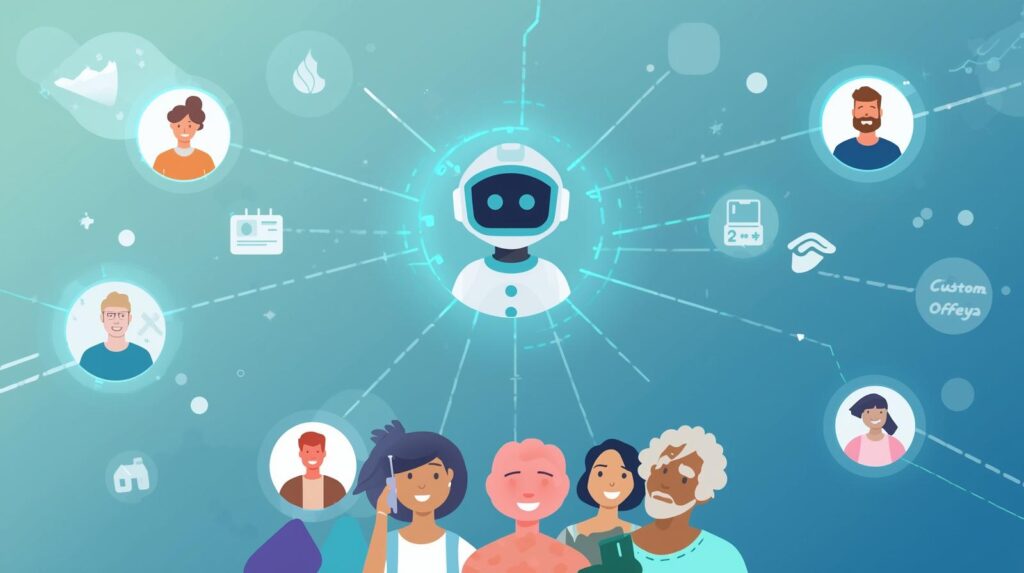
Another major advantage of AI chatbots is their ability to deliver personalized experiences. In 2026, AI Personalization will no longer set brands apart—it will simply be the minimum customers expect.
Using technologies like Machine Learning, chatbots can analyze previous customer interactions and behavior.
This allows them to:
* recommend relevant products
* provide customized offers
* guide users based on their past activity
Personalized interactions make customers feel understood, which strengthens their connection with the brand.
Best Practices for Implementing AI Chatbots
If your business is planning to introduce AI chatbots, following these best practices can help ensure success.
1. Keep Conversations Clear and Simple
Customers prefer quick and straightforward answers. Avoid overly complicated chatbot flows.
2. Offer Easy Access to Human Support
Users should always have the option to speak with a human representative when needed.
3. Continuously Improve the System
AI chatbots become smarter over time when trained with real customer interactions. Regular updates help improve accuracy and performance.
4. Track Performance Metrics
Businesses should monitor key indicators such as:
* response time
* resolution rate
* customer satisfaction scores
These insights help identify areas for improvement.
The Future of Customer Support
Customer support is evolving rapidly. The future will likely involve a combination of automation and human expertise.As technologies like Generative Artificial Intelligence continue to advance, chatbots will become even more conversational and context-aware. Businesses that adopt AI strategically will be able to deliver faster support, improve efficiency, and maintain strong customer relationships.