Introduction
The future of AI in advertising is becoming one of the biggest discussions in the digital marketing industry. Businesses are rapidly moving toward AI-powered marketing because it helps them understand customers better, create personalized campaigns, and improve advertising performance. Today’s consumers expect brands to deliver fast, relevant, and engaging experiences. Traditional advertising methods alone are no longer enough. This is where Artificial Intelligence is changing the game. From smart targeting to automated ad optimization, AI is helping companies make faster and more accurate marketing decisions. In this blog, we will explore how AI is reshaping advertising, upcoming trends, benefits, challenges, and what businesses should expect in the coming years.
Featured Snippet Paragraph
The future of AI in advertising is focused on smarter targeting, personalized customer experiences, automated campaigns, and data-driven marketing strategies. AI helps businesses improve ad performance, reduce costs, and connect with audiences more effectively through advanced analytics and machine learning.
Future of AI in Advertising: A New Era of Digital Marketing
Artificial Intelligence has transformed from a futuristic concept into a practical business tool. In the advertising world, AI is now helping brands create campaigns that are more personalized, efficient, and result-oriented. The future of AI in advertising will continue to evolve as companies use intelligent systems to improve customer engagement and marketing performance. Instead of relying only on manual strategies, marketers are now using AI tools to analyze customer behavior, automate tasks, and predict future trends.

Businesses should also understand the future of digital marketing and learn how automation is transforming online promotion strategies.
What Does AI Mean in Advertising?
AI in advertising refers to the use of intelligent technologies that help marketers make better decisions using data and automation.
These technologies include:
- Machine Learning
- Predictive Analytics
- Natural Language Processing
- AI Chatbots
- Smart Automation
- Consumer Behaviour Analysis
AI systems process large amounts of information quickly and identify patterns that humans may miss. This allows businesses to create more effective advertising campaigns.
Why the Future of AI in Advertising is Important for Marketing
Consumer behavior is changing rapidly. People now expect brands to understand their interests and provide personalized experiences.
AI helps businesses achieve this by:
- Tracking customer preferences
- Studying online behavio
- Delivering targeted advertisements
- Improving campaign accuracy
As competition increases online, businesses that use AI can respond faster to market changes and customer demands.
Key Benefits of the Future of AI in Advertising
Better Customer Personalization
Personalization is one of the strongest advantages of AI-driven advertising.
AI studies:
- Browsing activity
- Purchase history
- Search patterns
- User engagement
Based on this information, businesses can show advertisements that match individual interests.
This creates:
- Higher engagement
- Better customer satisfaction
- Improved conversion rates
Smarter Audience Targeting
Traditional advertising often targets broad audiences. However, AI allows businesses to focus on users who are more likely to become customers
AI tools identify:
- Customer interests
- Demographic behavior
- Buying intent
- Online activity patterns
This improves marketing efficiency and reduces unnecessary ad spending.
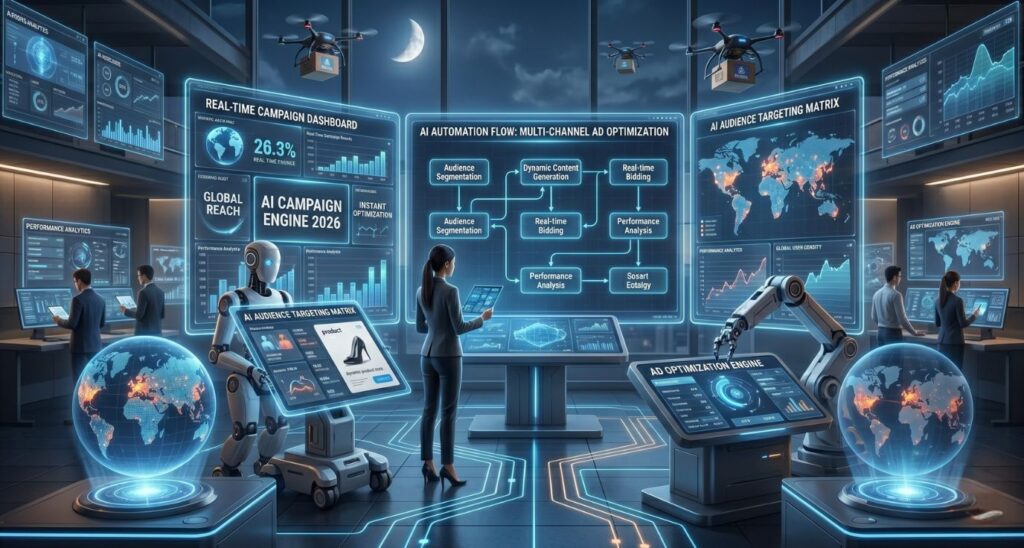
Automated Campaign Management
Automation is playing a major role in the future of AI in advertising.
AI-powered advertising platforms can:
- Adjust bidding automatically
- Optimize ad placements
- Test multiple creatives
- Improve campaign performance in real time
This helps marketers save time while improving advertising results.
Predictive Consumer Insights
AI can predict future customer behavior by analyzing past data.
Businesses can understand:
- What customers may purchase next
- Which ads generate better results
- When users are more likely to engage
These insights help brands create stronger marketing strategies.
Faster Content Creation
AI tools are also changing how marketing content is produced.
Today, businesses use AI to create:
- Social media captions
- Ad headlines
- Product descriptions
- Email marketing copy
- Video scripts
Although human creativity remains important, AI helps speed up the content creation process.
Future of AI in Advertising Trends in 2026
The future of AI in advertising will be influenced by several major trends in the coming years.
Voice Search Advertising
Voice assistants like Siri, Alexa, and Google Assistant are becoming increasingly popular.
As more people use voice search, businesses are optimizing advertisements for:
- Conversational keywords
- Voice-based queries
- Smart speaker searches
Voice advertising is expected to grow significantly in the future.
AI-Driven Video Marketing
Video content continues to dominate digital platforms.
AI now helps marketers:
- Edit videos automatically
- Analyze viewer engagement
- Personalize video advertisements
- Improve video recommendations
This makes video marketing more effective and data-driven.
Hyper-Personalized Advertising
Future advertising campaigns will become even more personalized.
AI will combine:
- Real-time behavior
- Customer interests
- Location-based data
- Purchase patterns
to create highly relevant ad experiences for each individual user.
Smart Chatbots and Virtual Assistants
AI chatbots are becoming an important part of customer communication.
Businesses use them for:
- Customer support
- Lead generation
- Product recommendations
- Instant interaction
This improves user experience and increases customer engagement.
Programmatic Advertising Growth
Programmatic advertising uses AI to automate the buying and placement of ads.
This technology helps businesses:
- Reach the right audience
- Buy ad space efficiently
- Optimize campaigns instantly
As AI improves, programmatic advertising will become even more powerful.
Challenges Businesses May Face
Despite its advantages, AI in advertising also comes with some challenges.
Privacy and Data Security
Customers are becoming more aware of how companies use their personal information.
Businesses must:
- Protect user data
- Follow privacy laws
- Build customer trust
Transparent data practices are essential for long-term success.
Limited Human Emotion
AI can analyze data effectively, but emotional storytelling still requires human creativity.
Successful marketing will continue to depend on:
- Creative thinking
- Brand storytelling
- Emotional connection
The best campaigns will combine AI efficiency with human creativity.
Dependence on Automation
Relying completely on automation may reduce manual decision-making skills.
Businesses should use AI as a support system rather than replacing human involvement entirely.
How AI Will Shape Marketing Careers
Many professionals worry that AI may replace marketing jobs. However, AI is more likely to change roles instead of eliminating them.
Future marketers will need skills such as:
- Data interpretation
- AI tool management
- Creative strategy
- Automation handling
- Digital communication
Professionals who adapt to AI technologies will have better career opportunities.
Industries Benefiting from AI Advertising
Several industries are already experiencing major improvements through AI-powered advertising.
E-commerce Industry
Online stores use AI for:
- Personalized recommendations
- Smart retargeting
- Customer segmentation
Healthcare Sector
Healthcare companies use AI to:
- Improve patient communication
- Promote services effectively
- Analyze audience needs
Education Industry
Educational institutions use AI for:
- Student targeting
- Course promotion
- Automated communication
Real Estate Businesses
Real estate companies use AI to:
- Generate leads
- Target buyers
- Improve advertising campaigns
Popular AI Advertising Tools
Many businesses now rely on AI-powered tools to improve their marketing performance.
Popular tools include:
- ChatGPT
- Jasper AI
- Canva AI
- HubSpot AI
- Google Performance Max
- Copy. AI
- Gemini AI
These platforms help marketers improve productivity and campaign effectiveness.
How Businesses Should Prepare for the Future of AI in Advertising
Businesses that want long-term success should start adapting to AI technologies today.
Invest in AI-Based Platforms
Choose tools that help automate marketing and improve customer targeting.
Train Marketing Teams
Teams should learn:
- AI automation
- Data analytics
- Content optimization
- Customer behavior analysis
Focus on Customer Experience
Even with advanced AI, customer trust and satisfaction remain essential.
Combine Technology with Creativity
The strongest marketing strategies will balance:
- AI-driven insights
- Human creativity
- Emotional storytelling
Why the Future Looks Bright
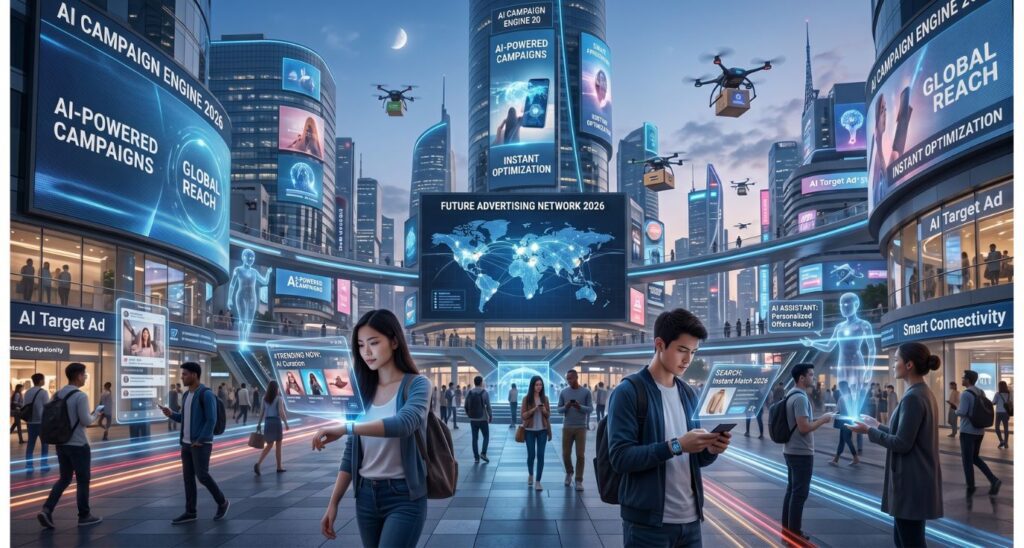
The future of AI in advertising is creating exciting opportunities for businesses worldwide. AI helps brands understand customers more deeply, improve advertising performance, and create better user experiences.
As AI technology becomes more advanced, marketing strategies will become faster, smarter, and more personalized.
Businesses that adapt early will gain a strong advantage in the competitive digital marketplace.
Conclusion
The future of AI in advertising is transforming how businesses connect with customers. From smart automation to personalized campaigns, AI is helping brands create better marketing experiences while improving efficiency and results. Companies that adopt AI early will have a stronger chance of succeeding in the rapidly evolving digital world. If you want to stay competitive, now is the right time to start exploring AI-powered advertising strategies and modern marketing technologies.