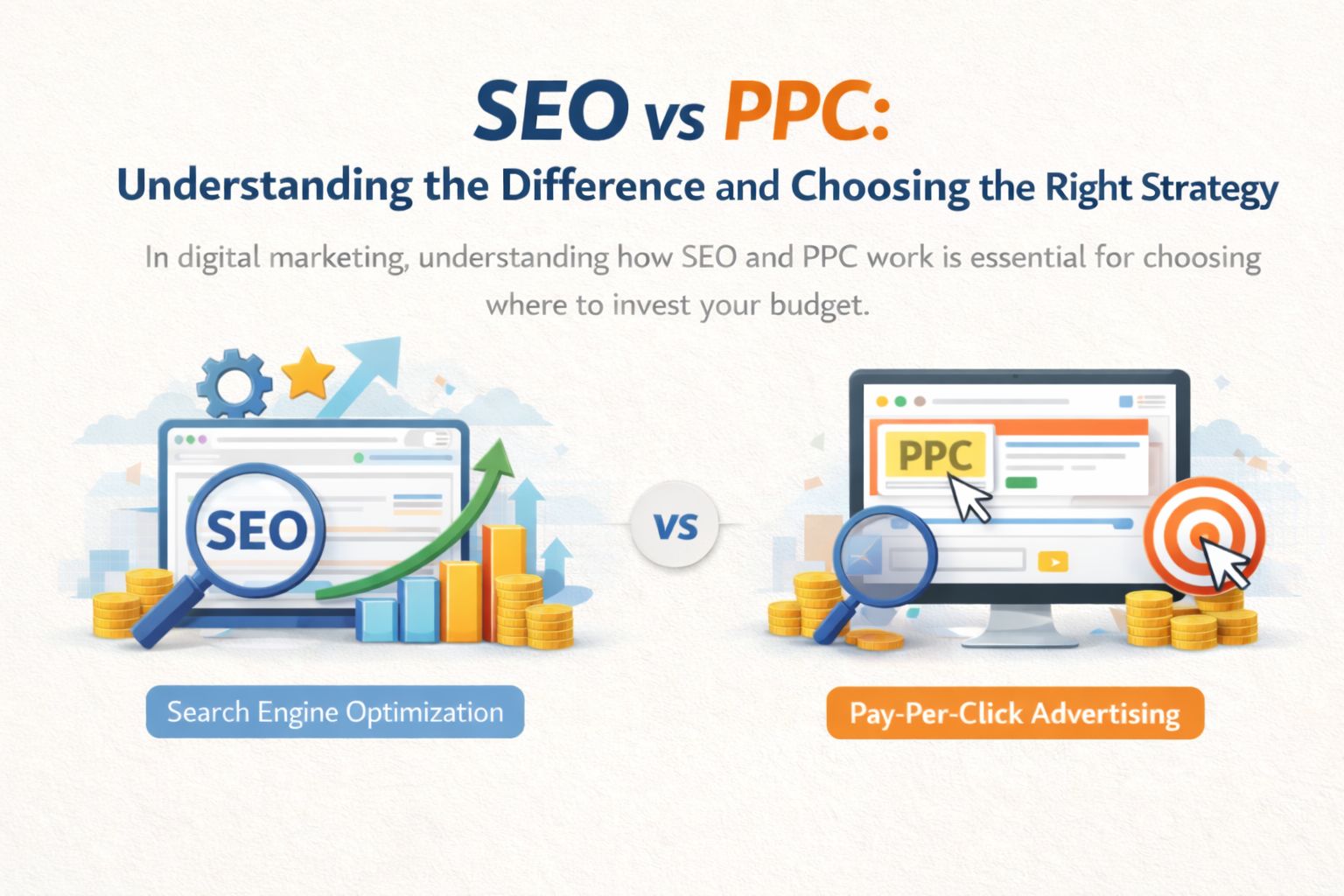

Learning SEO for beginners starts with understanding how search engines help people discover information online. When users search on Google, some websites appear among the first results, while others receive less visibility. Understanding how websites become visible in search results is where Search Engine Optimization (SEO) comes into the picture.
SEO for beginners introduces the essential methods used to improve a website’s presence in organic search results. It covers several activities, including finding suitable keywords, preparing useful content, improving website pages, and maintaining a technically accessible website.
If you are planning to enter the digital marketing field, SEO is a valuable skill to explore. You can start without advanced coding knowledge or previous professional experience. Learning the fundamentals and practicing them on a website will help you understand how different SEO activities work together.
What Is SEO?
Search Engine Optimization (SEO) is the process of improving a website so that its pages can appear more prominently in organic search results. It involves optimizing website content, structure, and technical elements to help search engines understand the pages and connect them with relevant searches.
For example, when someone searches for a digital marketing course, Google displays pages that it considers relevant to that search. SEO helps websites improve their chances of appearing in these unpaid search results by providing useful content and a better website experience.
For anyone learning SEO for beginners, understanding how search engines discover, understand, and rank web pages is an important starting point.
How Does SEO Work?
Search engines use automated systems to explore websites and organize information before presenting results to users. The process can be understood through three important stages: crawling, indexing, and ranking.
1. Crawling
Search engines discover website content with the help of automated software called crawlers or bots. These programs visit web pages and follow available links to explore other sections of a website.
This allows search engines to discover new content and revisit pages that may have been changed or updated.
2. Indexing
After discovering a webpage, a search engine may analyze its content and other relevant details. The information can then be stored in its search index.
Think of an index as a large collection of information about webpages. Google uses this information to identify pages that may be relevant when someone enters a search query. However, a discovered page is not necessarily guaranteed to be indexed.
3. Ranking
Ranking determines the order in which webpages appear for a particular search. Search engines evaluate different signals to identify results that may best match the user’s query.
Content relevance, page quality, usability, and the context of a search can all play a role in this process.
SEO helps website owners improve the quality and accessibility of their pages. However, no SEO method can promise a fixed position in search results.
Why Is SEO Important in Digital Marketing?
SEO gives businesses an opportunity to reach people who are already looking for information related to their products, services, or industry. It also helps businesses make their website content easier to discover.
Here are some ways SEO contributes to digital marketing:
- Search presence: Properly optimized pages can become eligible to appear for relevant search queries.
- Audience reach: Relevant keywords help businesses connect their content with people interested in particular subjects.
- Content development: Search research helps identify topics and questions that can guide website content.
- Website improvements: SEO encourages better page organization, navigation, and mobile usability.
- Brand recognition: Appearing in relevant search results can introduce a business to people who may not know about it.
- Ongoing visibility: Useful content can continue receiving organic visits over time when it remains relevant and competitive.
SEO is not a replacement for other marketing channels. It can work together with social media, email marketing, and paid advertising to support a broader digital marketing strategy.
What Are the Main Types of SEO?
SEO involves several areas of website optimization. Understanding these categories makes it easier to identify the activities required to improve different parts of a website.
1. On-Page SEO
On-page SEO deals with improvements made to individual website pages. It focuses on presenting information clearly and helping search engines understand the subject of each page.
Some important on-page SEO activities are:
- Finding keywords that match the page topic.
- Preparing suitable SEO titles and meta descriptions.
- Using an organized heading structure.
- Writing original and informative content.
- Providing descriptive alt text for images.
- Adding useful links between related pages.
- Improving the readability and layout of website content.
2. Off-Page SEO
Off-page SEO focuses on strengthening a website’s reputation through activities carried out beyond its own pages. These efforts help build connections with relevant websites, audiences, and online communities.
Common off-page SEO activities include:
- Backlink development: Earning references from other websites that point to your content.
- Digital PR: Sharing useful information that may attract coverage from relevant publications.
- Brand visibility: Increasing awareness of your business across suitable online platforms.
- Industry networking: Establishing connections with publishers and professionals in your field.
- Content distribution: Promoting valuable resources so interested audiences can discover them.
The objective is to develop a credible online presence. Building meaningful connections and earning relevant references is more useful than collecting unrelated links simply to increase backlink numbers.
3. Technical SEO
Technical SEO involves improving the way a website is structured and functions behind the scenes. It helps search engines access website content while supporting a smooth browsing experience.
Areas commonly covered by technical SEO include:
- Website speed and loading performance.
- Mobile-friendly page layouts.
- XML sitemap management.
- Robots.txt configuration.
- Secure HTTPS connections.
- Canonical tag implementation.
- Identification of broken links.
- Structured data setup.
- Crawling and indexing management.
4. Local SEO
Local SEO is useful for businesses that want to reach customers in specific locations. It focuses on improving a business’s presence when people search for nearby products or services.
For example, someone searching for a digital marketing institute in Noida may come across local business profiles and relevant website pages.
Businesses can improve their local search presence by maintaining accurate business details, updating their Google Business Profile, publishing useful location-related content, and requesting honest customer feedback.
How to Learn SEO Step by Step
SEO may seem like a broad subject when you first explore it. Dividing the learning process into smaller tasks makes it easier to understand each concept and practise it independently.
The following eight steps provide a practical starting point.
Step 1: Learn to Identify Search Intent
Before creating content, understand why someone is searching for a particular phrase. This purpose is known as search intent.
Different searches indicate different expectations. Most search queries can be placed into four common groups:
- Informational: The person wants to learn about something, such as “what is SEO”.
- Navigational: The search is intended to locate a particular website or webpage.
- Commercial: The person is researching and comparing available products or services.
- Transactional: The searcher is prepared to take an action, such as making a purchase or booking a service.
Understanding these categories helps you decide what type of content to create. For example, an informational query generally needs an explanatory article, while a transactional query may be better suited to a product or service page.
Step 2: Research Relevant Keywords
Keyword research helps you discover the search phrases people use to find information, products, and services. These phrases can guide your website’s content strategy and help you understand the topics your audience is interested in.
Consider these factors when evaluating keyword opportunities:
- Search volume: The estimated number of searches a phrase receives during a selected period.
- Keyword difficulty: An estimated measure of how competitive a keyword may be in organic search.
- Search intent: The information or action a person expects from the search.
- Topic relevance: The connection between the keyword and your website’s subject.
Google Keyword Planner and Google Trends are useful starting points for exploring search terms and identifying possible content topics.
Do not select keywords based on search volume alone. A phrase should also match your audience’s interests and the purpose of the page.
Step 3: Prepare Valuable Website Content
Good content should give visitors useful information instead of simply repeating search terms. Before writing, decide what the reader needs to understand and organize your explanations around that purpose.
For a blog post or informational webpage, consider including:
- A title that clearly introduces the subject.
- An opening paragraph that explains what the reader will learn.
- Relevant sections arranged under descriptive headings.
- Clear explanations and practical examples.
- A closing section that brings the main ideas together.
Use straightforward language and avoid adding information that does not support the topic. Before publishing, proofread the article and check that it answers the questions your intended audience may have.
Step 4: Improve Individual Website Pages
On-page optimization involves reviewing the different elements of a webpage and making them more useful for visitors and search engines.
Start with the following tasks:
- Include the main keyword naturally in the SEO title.
- Prepare a unique meta description that summarizes the page.
- Give the page one clear main heading.
- Divide longer content into relevant sections.
- Use related terms where they fit the subject.
- Add meaningful alt descriptions to images.
- Keep page addresses short and understandable.
- Connect related pages with relevant internal links.
Each page should have a clear purpose. Avoid repeating keywords simply to increase their frequency, as this can affect the natural flow of the content.
Step 5: Explore Backlinks and Link-Building Methods
A backlink is created when another website includes a link that leads to one of your webpages. Such references can help search engines discover content and provide additional context about a website.
When developing backlinks, pay attention to the subject and credibility of the referring website. A relevant reference can be more useful than numerous links from unrelated sources.
Some approaches to link building include:
- Creating detailed guides and useful resources.
- Writing relevant guest articles for industry publications.
- Connecting with website owners and content publishers.
- Producing original material that others may want to reference.
- Sharing informative content in suitable professional communities.
Avoid automated link schemes and practices that attempt to manipulate search rankings. Focus on building genuine relationships and earning references that are relevant to your subject.
Step 6: Understand Technical SEO Fundamentals
A website needs a sound technical foundation so its important pages can be accessed and understood.
Beginners can start by examining whether important pages are available to search engine crawlers. They should also review mobile usability, loading performance, broken links, and indexing status.
Google Search Console can help website owners examine how their pages perform in Google Search. It also provides useful information about indexing and certain technical issues.
As your knowledge develops, explore topics such as canonical tags, structured data, crawl management, and sitemap configuration in greater detail.
Step 7: Practise Local SEO
If a business serves a particular city or region, local SEO can help it become more discoverable for location-related searches.
Begin by reviewing the accuracy of the business’s name, address, and phone number across relevant online listings. Keep its business profile updated and provide clear information about its services.
You can also prepare useful location-specific website content. Each page should explain something meaningful about the service or area rather than repeating identical paragraphs with only the location name changed.
Step 8: Review Your SEO Results
SEO requires ongoing attention. Checking website performance regularly helps you understand how people discover your pages and which areas may need further work.
Google Search Console can show information about search queries, clicks, impressions, and indexing. Google Analytics can provide additional insights into visitor activity on your website.
Some useful performance indicators include:
- Organic search clicks and impressions.
- Search terms that bring visitors to your pages.
- Average search result positions.
- Visits coming from organic search.
- The indexing status of important webpages.
- Performance of key website landing pages.
Review these measurements over time rather than making decisions based on a single day’s results. Use the information to improve existing pages and identify opportunities for new content.
SEO Mistakes That Beginners Should Avoid
While learning SEO, beginners may concentrate too much on keywords and rankings. However, website quality, relevance, and accessibility also deserve attention.
Watch out for these common mistakes:
- Excessive keyword repetition: Using the same phrase too often can make an article sound unnatural and reduce readability.
- Incorrect content targeting: A page may attract the wrong audience if its content does not match the purpose of the search.
- Creating repetitive pages: Publishing several pages with almost identical information can make it difficult to offer distinct value.
- Poor mobile experience: Visitors should be able to read and navigate website content comfortably on mobile devices.
- Unrelated link building: Links from irrelevant or manipulative sources may create problems for a website’s search performance.
- Neglecting website maintenance: Accessibility, crawling, and indexing issues can affect the availability of important pages in search results.
- Looking for immediate results: SEO involves continuous improvement, and changes in rankings or traffic may take time.
A better approach is to focus on useful content, a well-maintained website, and optimization activities that genuinely benefit visitors.
Frequently Asked Questions About SEO for Beginners
1. What does SEO mean in simple terms?
SEO is the process of improving website content and structure to help people discover relevant pages through unpaid search results. It includes keyword research, content improvements, technical checks, and other optimization activities.
2. Can someone with no experience start learning SEO?
Yes. Beginners can start with basic topics such as how search engines work, keyword selection, and on-page optimization. Once these concepts become familiar, they can move on to technical SEO and backlink development.
3. How much time is needed to learn SEO?
The time required depends on your learning routine and the level of knowledge you want to achieve. Basic concepts can be introduced within a few weeks, but developing practical skills requires regular application and continued learning.
4. Is programming knowledge necessary for SEO?
Programming is not essential for many common SEO tasks. Keyword research, content planning, title writing, and basic performance analysis can be performed without coding. However, familiarity with HTML and website structure can be useful when handling technical optimization.
7. Does SEO benefit small businesses?
SEO can help small businesses reach people searching for relevant products and services. Improving website information, maintaining accurate business details, and creating useful content can support their efforts to become more visible online.
Take the Next Step in Your Digital Marketing Learning Journey
SEO introduces several important skills that are useful in digital marketing. Keyword research, content creation, webpage optimization, backlink development, and performance analysis all contribute to understanding how websites attract visitors through search engines.
As you practice these activities, you can develop a better understanding of website optimization and how it fits into a wider marketing strategy.
If you want to study SEO alongside other digital marketing subjects, explore the Foundation AI-Integrated Digital Marketing Course at PS Academy.